Case Study
How Tabby Used Demand Generation to Grow Users by 1,900%
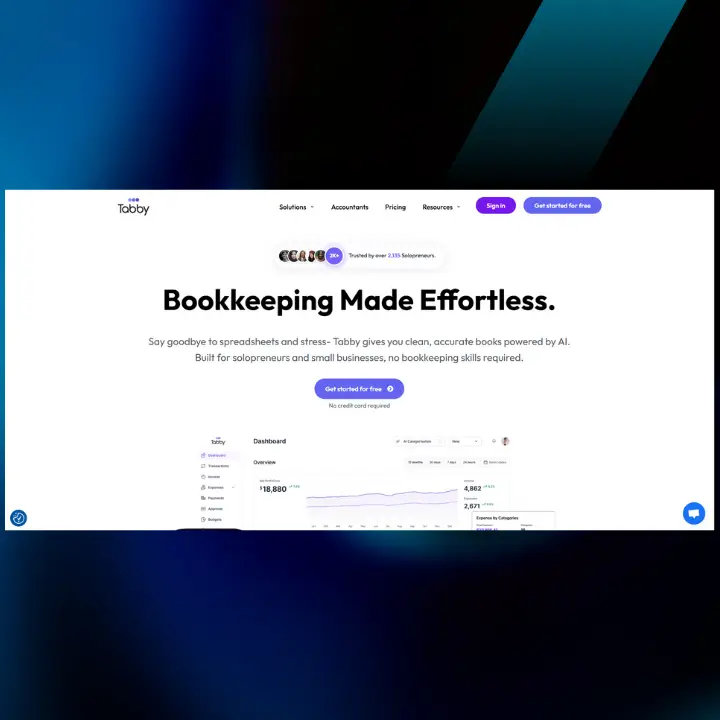
Case Study
How Tabby Used Demand Generation to Grow Users by 1,900%
The Challenge
No clear demand generation plan was in place, even though the product was ready to launch and visibility was still very low.
Setting accurate expectations for Tabby was complex because of the finance and bookkeeping market's overcrowding. Tabby's positioning was especially difficult because laying out an accounting solution to non-accounting people is a hard sell.
The trust needed to speak to potential customers was not settled sufficiently by a more technical claim. Tabby needed to prove itself to its customers by demonstrating the product’s messaging.
What We Did
We managed Tabby’s marketing for all of the months from Jul - Dec 2025 and managed to drive growth at all of the stages of the funnel by brand building, advertising, search engine optimization, partnerships, user generated content, emails, community driven content, and writing.
All levels of the marketing funnel at Tabby were served by the other channels we generated: advertising, search engine optimization, content creation, and marketing by emails, all supplemented with Product Hunt, partnerships, user generated content, and affiliate marketing.
Tracking, CRO, and scalability: In support of the more complex analyses of user behavioral patterns, we reinforced set up dashboards, event tracking, advanced analytics, and customer relationship management and conversion rate optimization.
The Results
Tabby was able to achieve about $38,000 to $39,000 in monthly recurring revenue, with over 1,400+ users, and a conversion rate that was more than 91% from trial to paid.
Total impressions crossed 50k, keyword rankings grew by over 4,500%, and organic traffic rose from almost zero to 114 daily visitors. Email became the top acquisition channel, driving over 55% of total traffic with high engagement.
PPC campaigns delivered 178 conversions at a low $19.65 cost per conversion, while active users grew nearly up to 1,900% and churn dropped by over 79%.
Introduction
Sector: Finance and Accounting Technology
Location: New York, USA
Service Offered: AI-powered bookkeeping that takes care of day to day financial tasks and keeps books clean without the usual headache.
Target Audience: Small businesses, solo founders, and self-employed professionals who want simple, accurate bookkeeping without spending too much time or money on it.
Tabby makes bookkeeping easy and stress free by using AI to automate the boring parts. It helps business owners get focused, manage their time better, and understand their money without having to be an accounting person.
Before Rank Wizards
Tabby began with a simple, real problem. One founder, Ahad Ali, a CPA in New York, worked with small businesses for over 14 years. He kept seeing messy books, confusing numbers, and too much manual work. That frustration inspired Tabby.
After building the product and finalizing the tech, the Tabby team approached Rank Wizards before launch. They already had a solid GTM strategy in place. We stepped in to refine it and focus on demand generation, while the Tabby team handled the other GTM pieces.
Challenges
Although a product is actually completed, there is still no defined strategy for demand generation.
Positioning Tabby is challenging, considering how competitive the finance and bookkeeping market is.
Prior to launch, visibility is low, and there is uncertainty regarding whether the product will be able to reach the target audience.
There is a need to drive a solution focused on CPAs to non accounting users.
There is a need to communicate the trust, accuracy, and reliability of the product, and to do so without being overly complex or technical.
What We Did (Department Wise)
Full Marketing Workplan
From July 2025 to December 2025, we ran Tabby’s full marketing plan across seven areas. We Boosted:
Brand visibility
Paid ads
SEO
Partnerships
User generated content
Social and web content
Email campaigns
Community engagement
Analytics tracking for result improvement
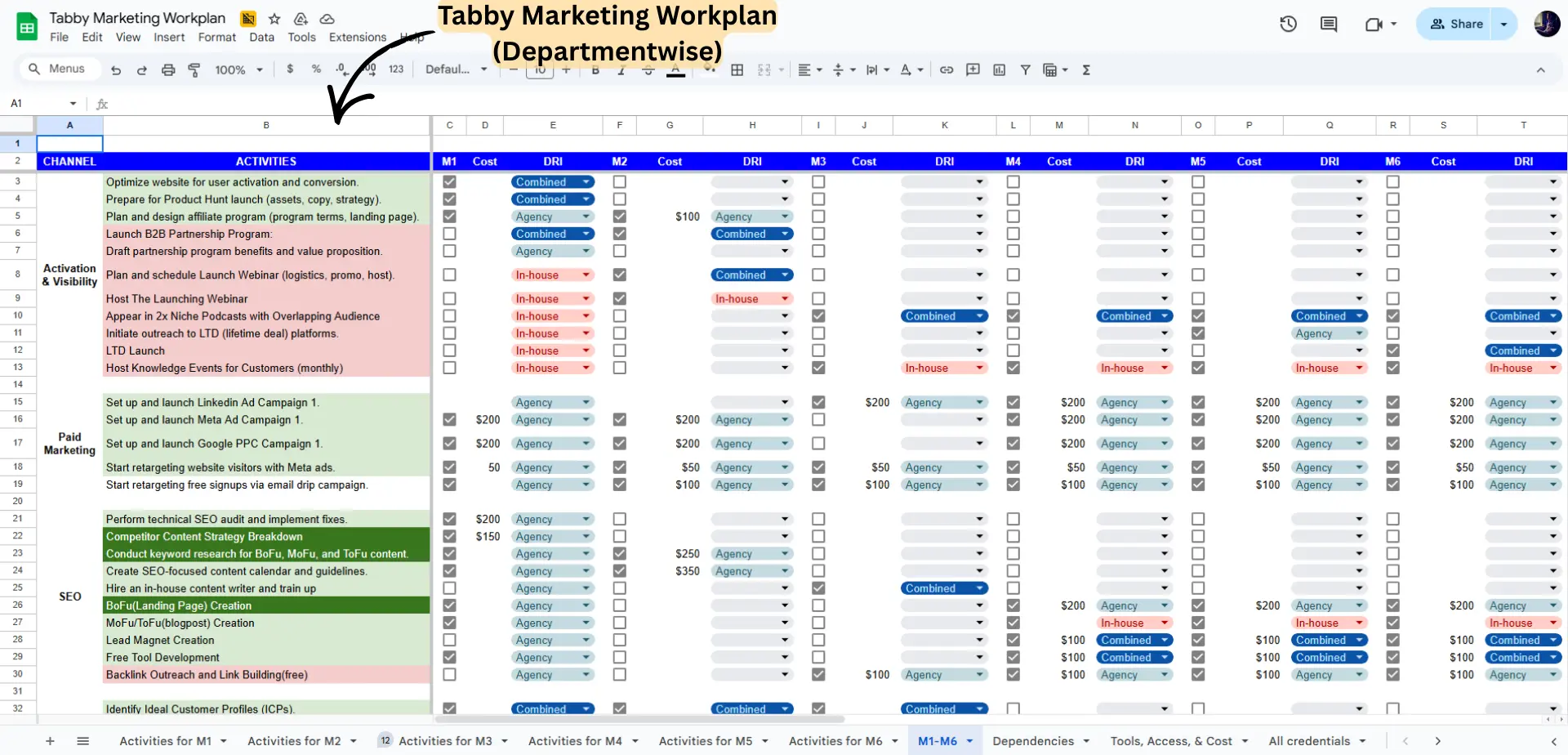
Activation & Visibility
We optimized the website for keywords and improved the UI/UX, speed, and CTAs.
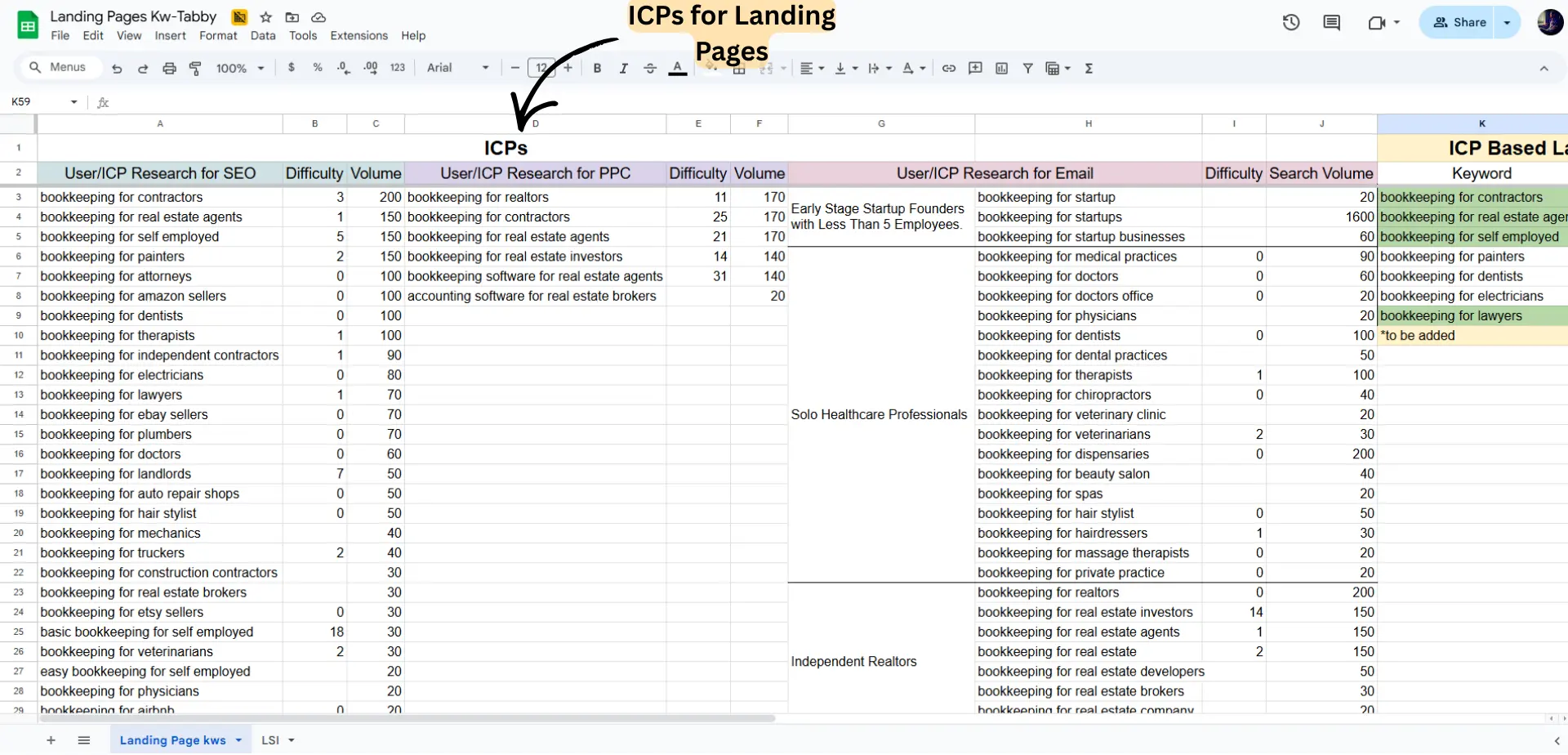
Suggested ICP-targeted landing pages for specific keywords so the right audience reached and converted on the relevant pages.
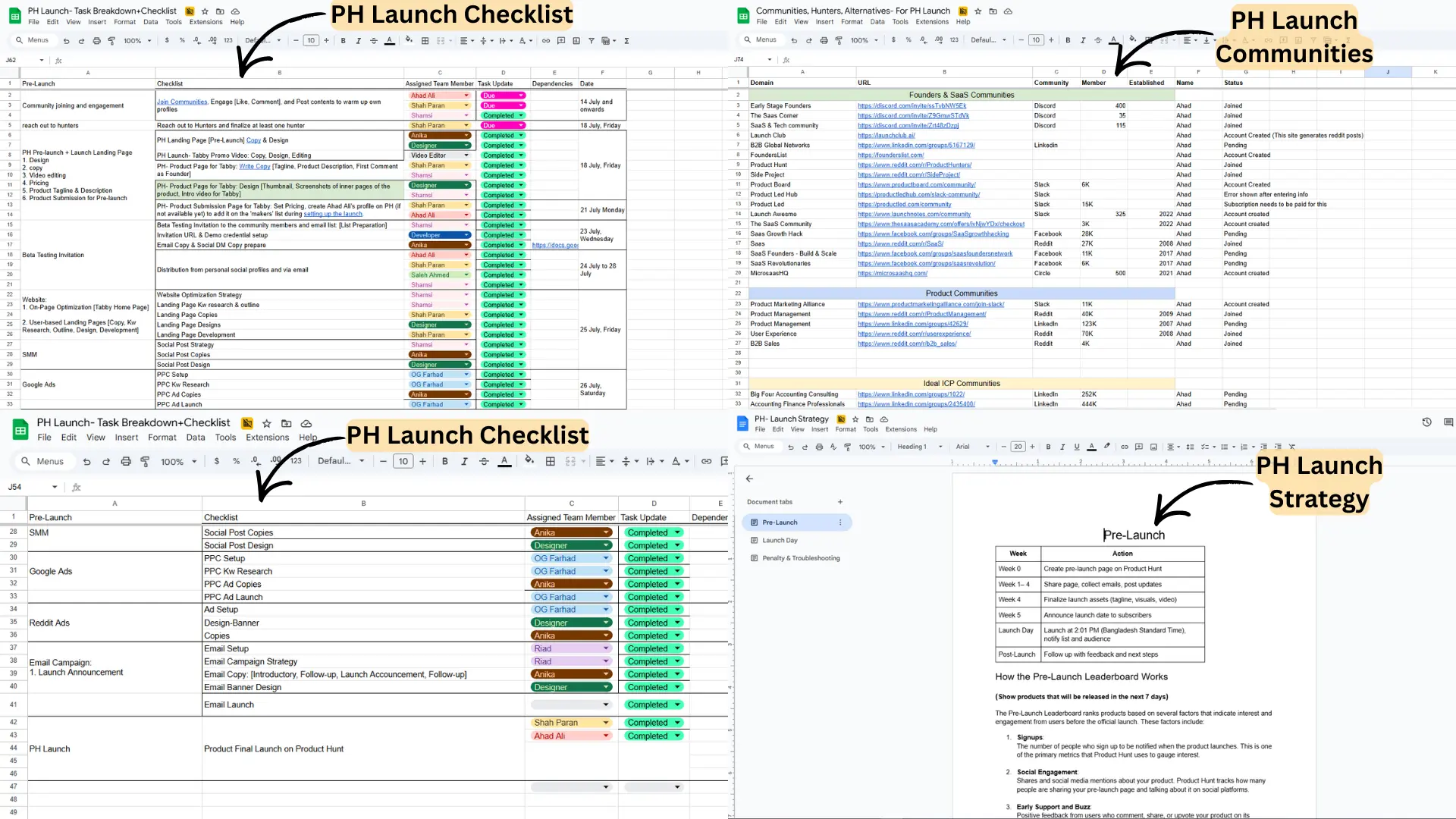
We generated a full strategy for the Product Hunt launch. This included writing a compelling copy and assembling all the necessary artifacts: visuals, description, and supplementary content. Then we carried out the launch and kept a keen eye on the metrics. To cover all bases, we structured a comprehensive task breakdown and process checklist. We also scheduled some time for process-related troubleshooting to boost our chances for a successful launch and proper audience reach.
We designed a strategy for the launch of the affiliate program and set clear terms. We designed the landing page for the affiliate program and launched it.
Paid Marketing
An ad campaign for LinkedIn, Meta, and Google was created and activated. On Google Ads, self-employed individuals were targeted which drove better CTR and consistently gained impressions in the first 6 months. Campaigns on TikTok and Reddit were tried in the beginning, but due to high cost per conversion and the low relevance of the leads we abandoned them.
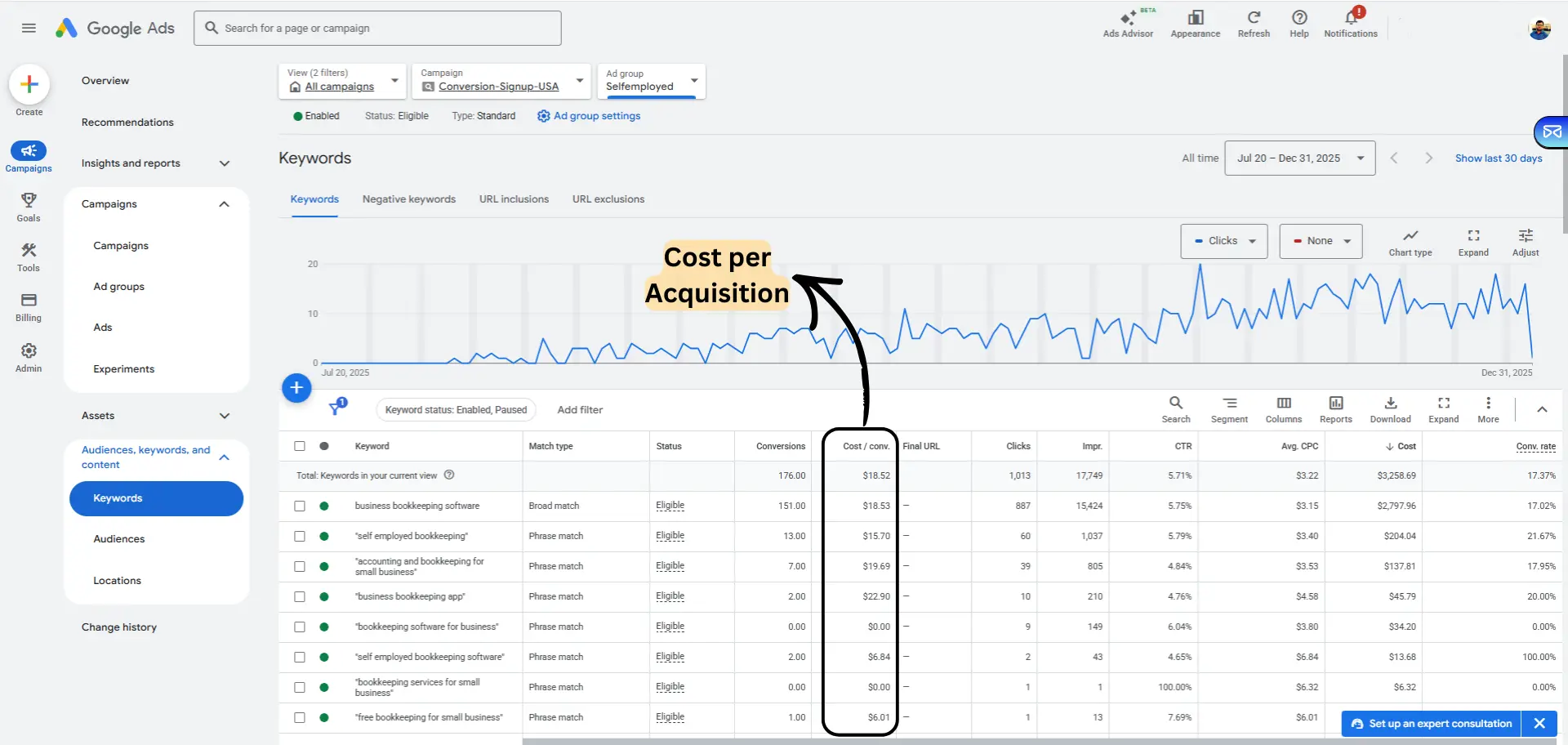
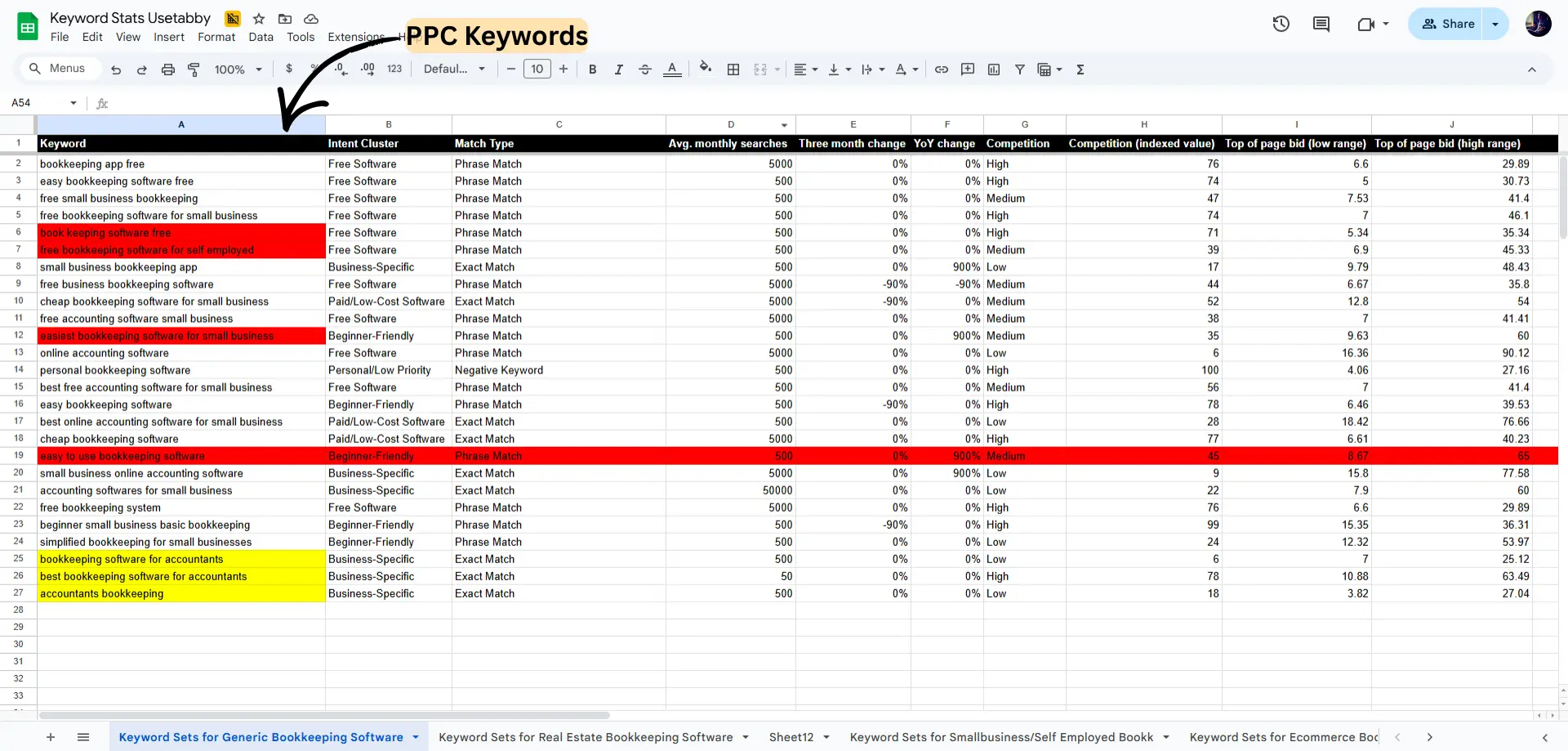
In regards to PPC, the competition, and more were considered along with search intent, clustering, match type, average monthly search volume, and year-over-year search changes for a particular ad to analyze keywords. Different sets of keywords were tested such as the broad term “bookkeeping software”, the specific term “real estate bookkeeping software”, and the audience specified terms “small business/self-employed bookkeeping,” and “e-commerce bookkeeping software” to measure each of their performances.
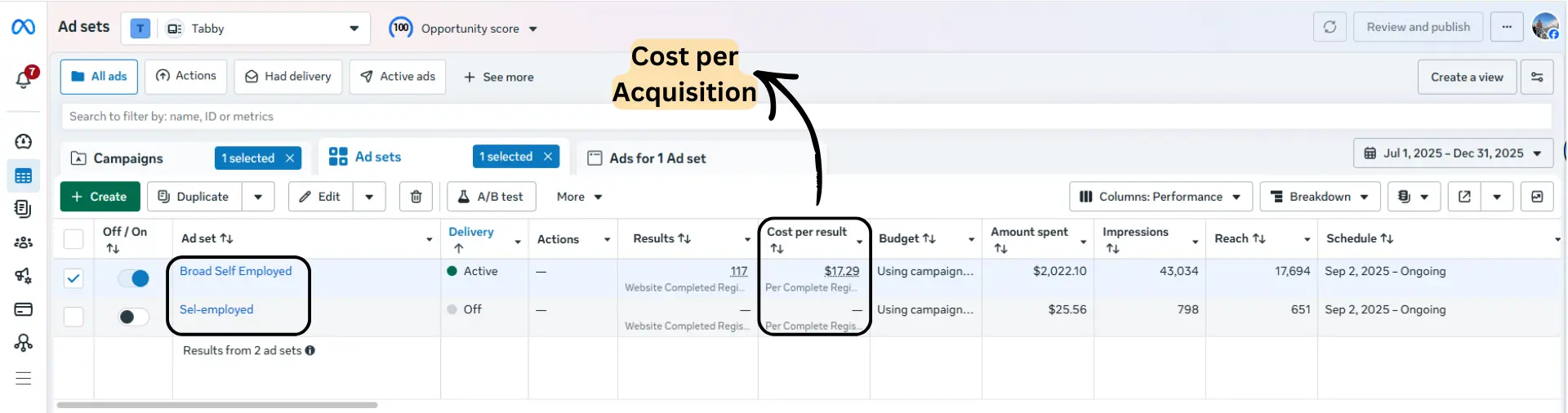
In Meta ads, we started retargeting those who previously visited our website and self-employed individuals who fit within the targeted interest demographic. Performance of the 7 ad copies was tested and the highest performing copy was a UGC style, which continues to deliver good results. Testing interest-based and broad audience targeting was done and the broad audience targeting was more effective, resulting in a better cost per outcome.
Content & SEO
We completed a full technical SEO audit and resolved quick wins and low-hanging issues to improve the site's performance. We also studied the content strategies and positioning of competitors: Otto, Booke, and Wave Apps. We used Ahrefs and Semrush for detailed competitor SEO analysis, batch comparison, and report creation for Tabby.
We performed keyword research across ToFu, MoFu, and BoFu for different verticals: construction and real estate, finance and legal, small business, self employed, solopreneur, and contractor. We created an SEO content-based calendar with standard operating procedures, tracking methods, and performance metrics for easy monitoring.
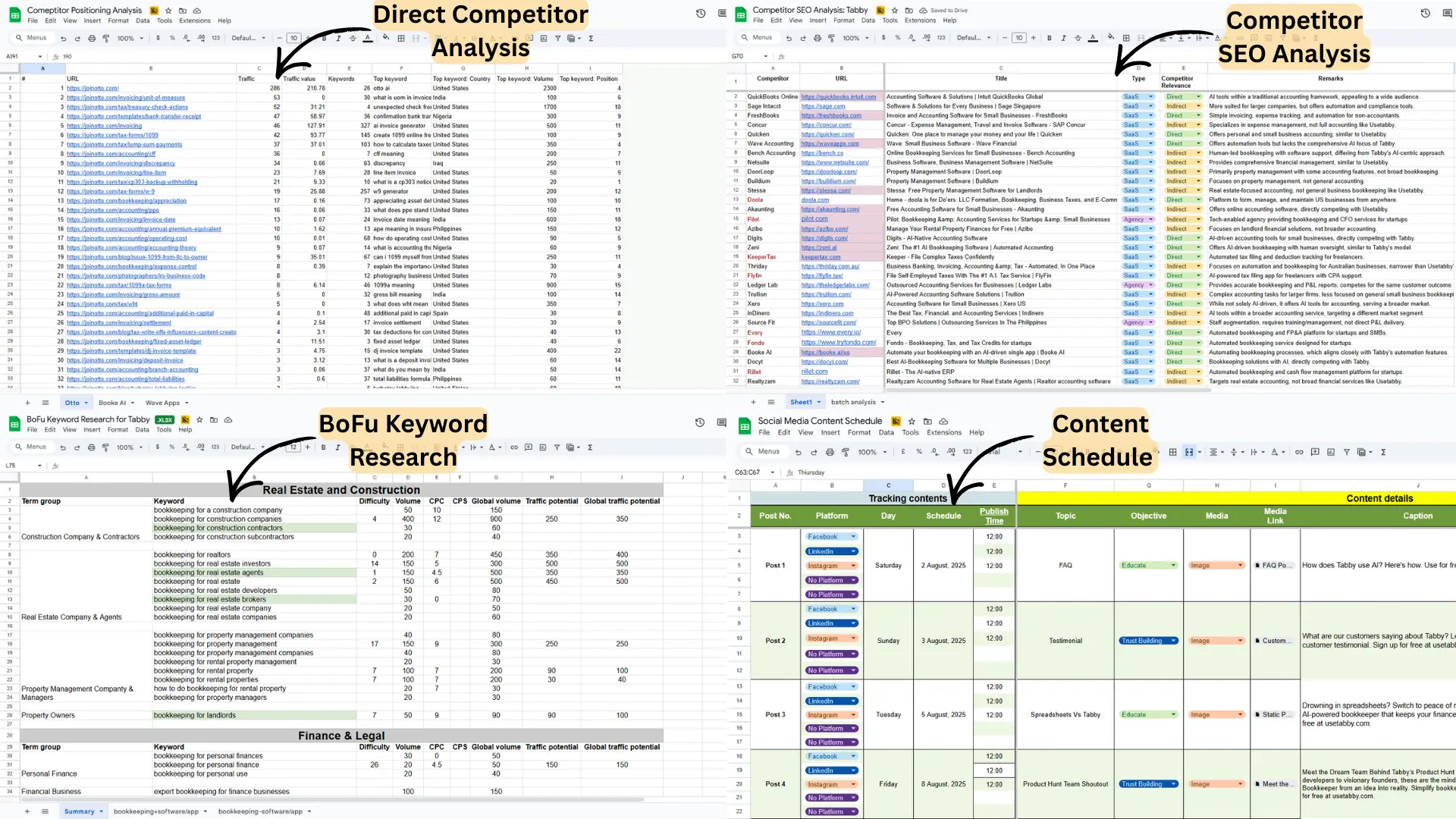
We hired and trained two content writers in-house to increase the content production rate and improve quality. We built BoFu landing pages along with MoFu and ToFu blog content to support users at every stage of the funnel.We made lead magnets and built free tools to attract users and engage and convert them.
B2B Partnerships
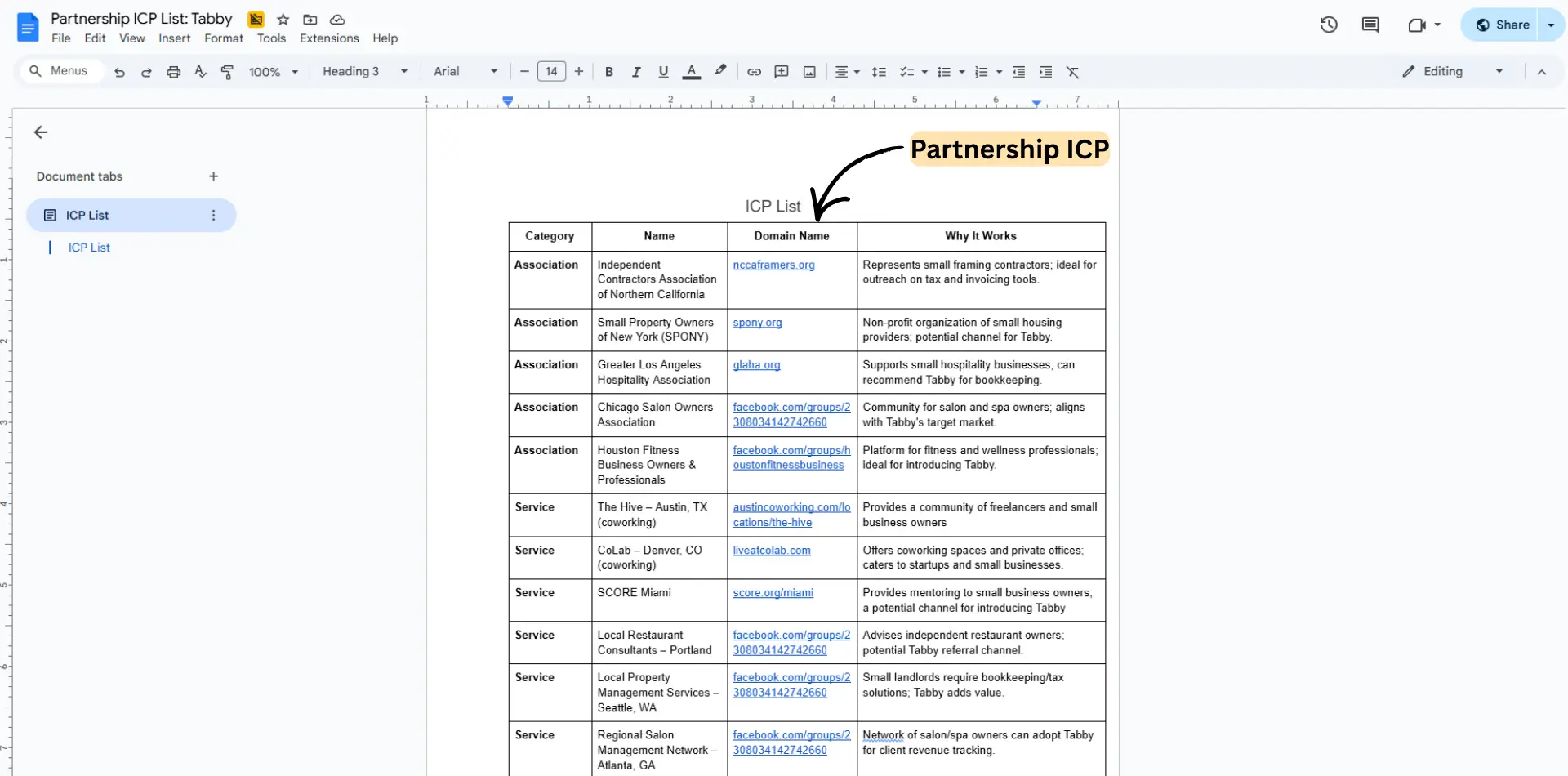
We built ideal customer profiles for partnerships by category name, domain type, and rationale for each. This made it easier to identify potential partnerships and align the partnerships to the business objectives and target audience.
UGC & Influencer Marketing
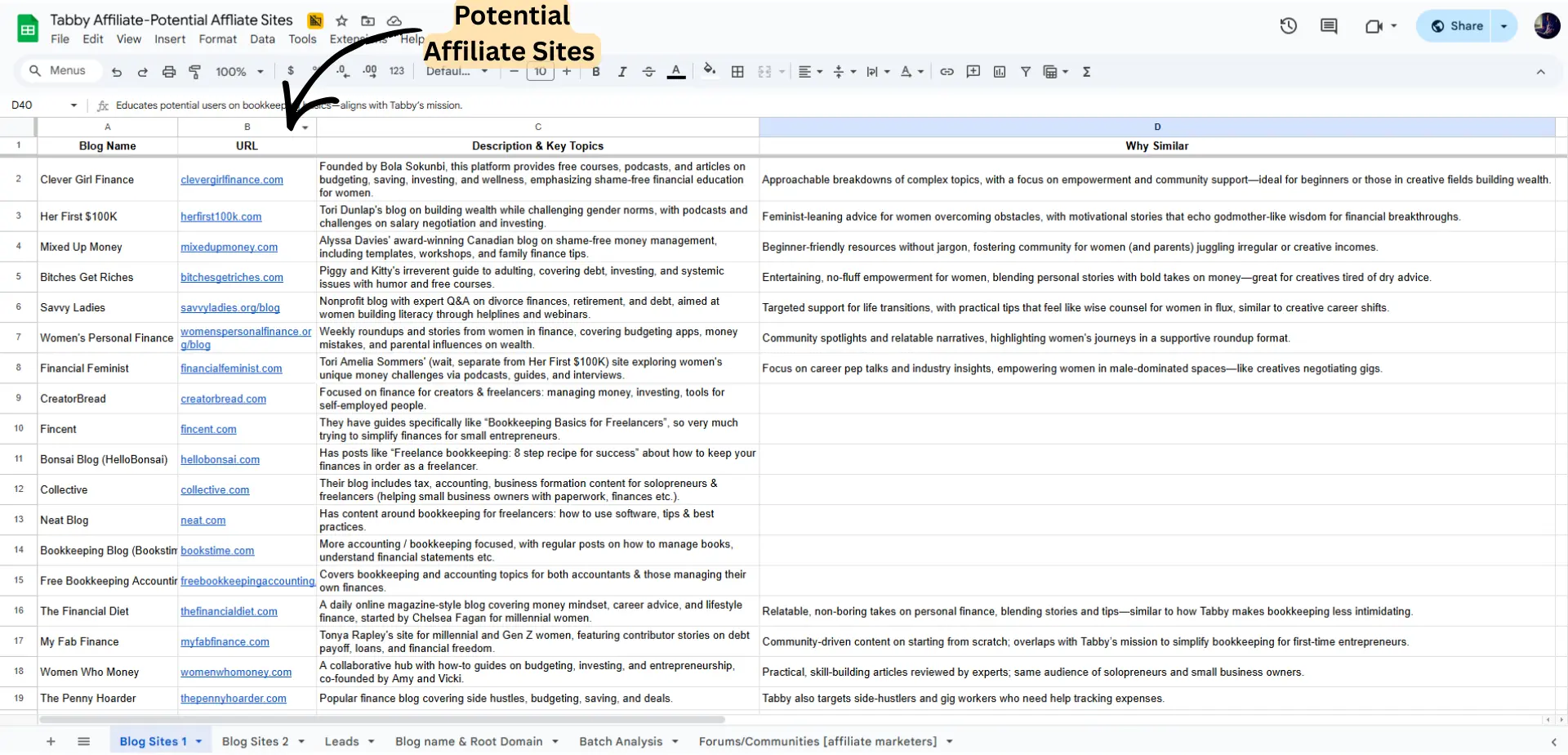
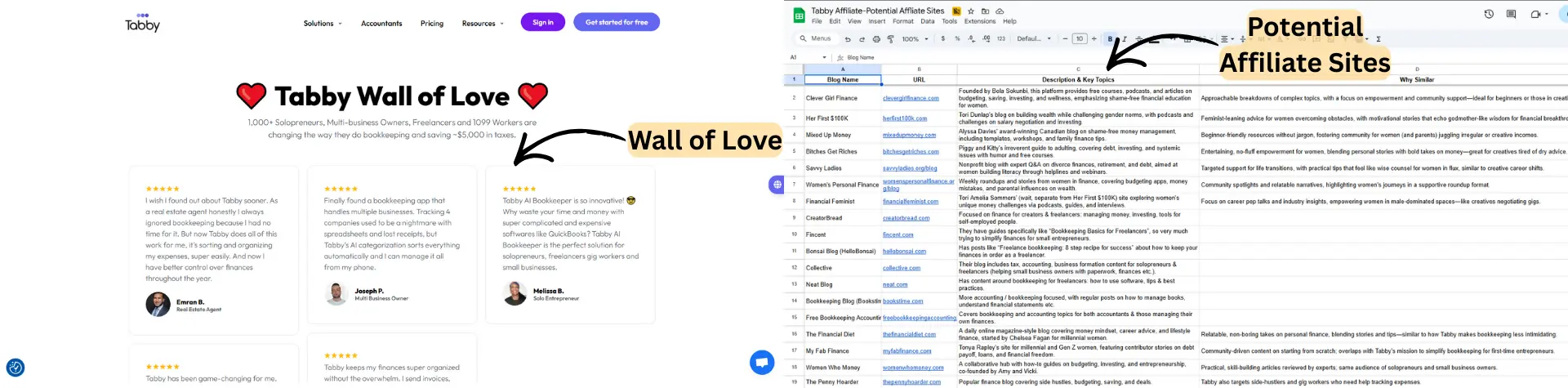
We organized a creator partnership program with a custom-designed affiliate site plan, which included documentation of the blog name, URL, description, key topics, and a seven-point audience-content alignment rationale. In parallel, we constructed a public Wall of Love to highlight the positive testimonials and build trust.
Content Marketing (Social + Web)
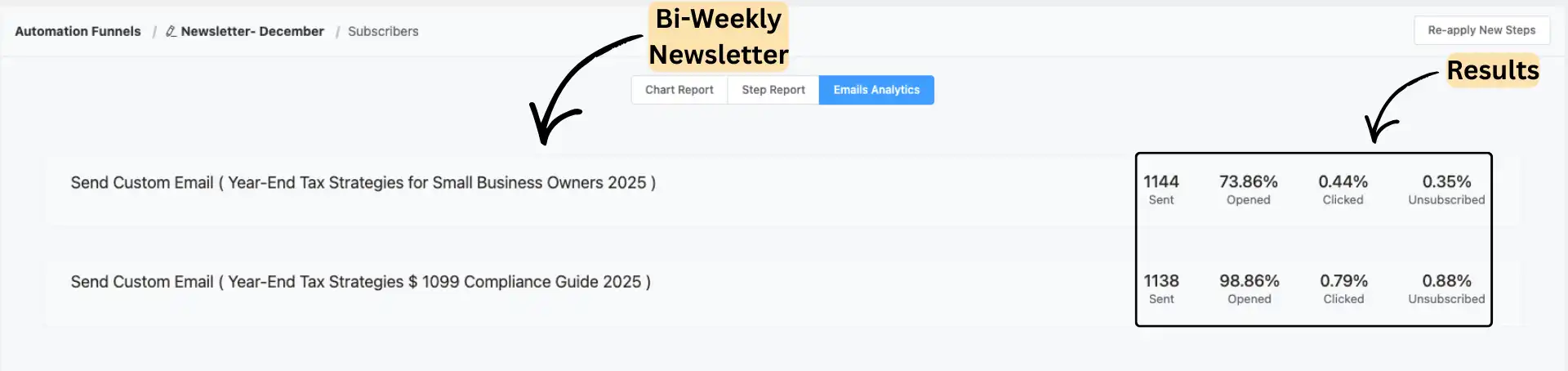
We initiated a weekly newsletter as a means of collecting inbound user contacts while maintaining communication and engagement through content.
Email Marketing
We established an inbound CRM system with FluentCRM and integrated it with Google Workspace. This involved building a new project, activating the Gmail API, configuring the credentials, and then publishing the OAuth app and Access detail collection.
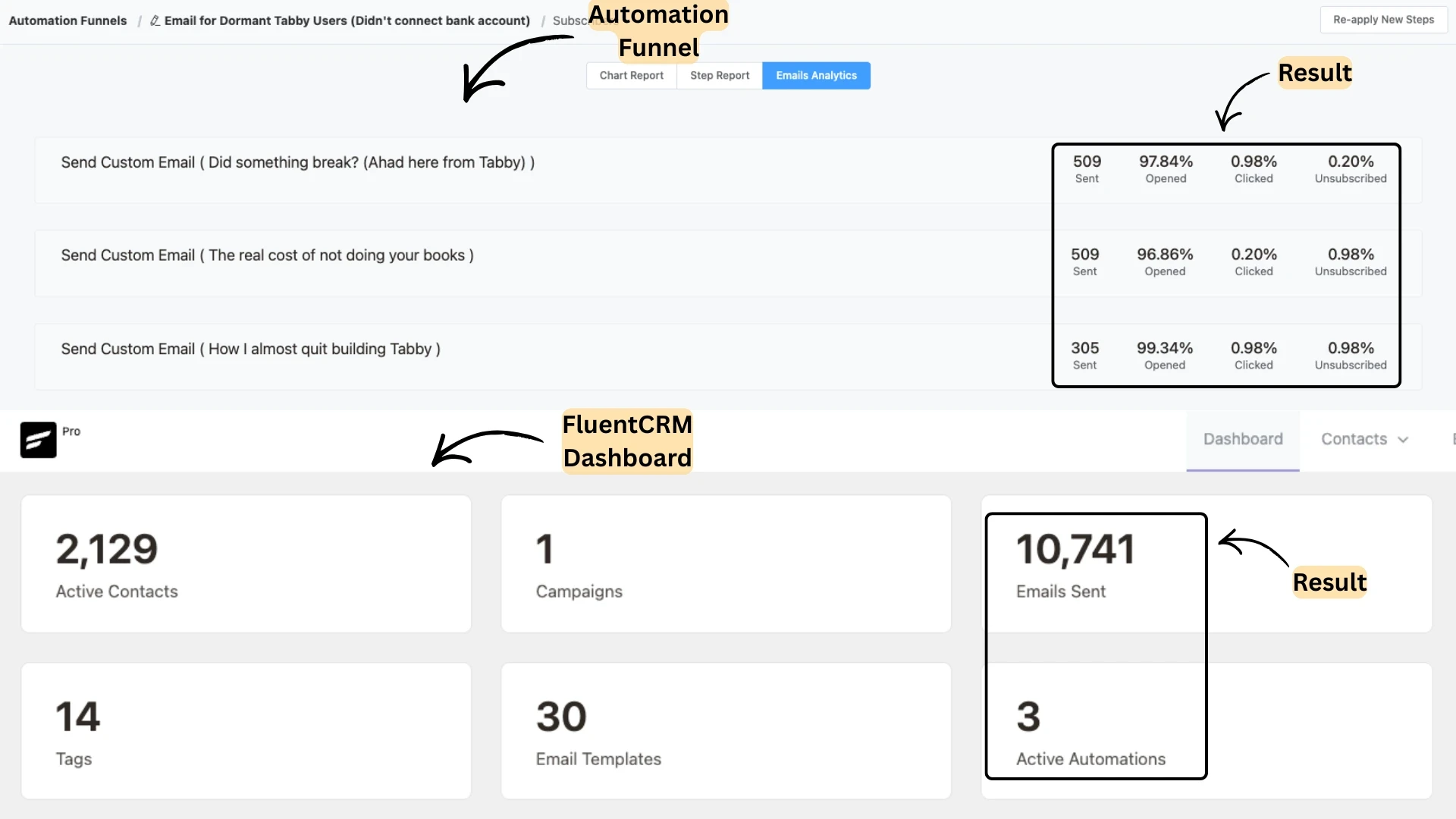
After this, we could create lists and tags for better segmentation to be able to have targeted campaigns and convert free users into paying users.
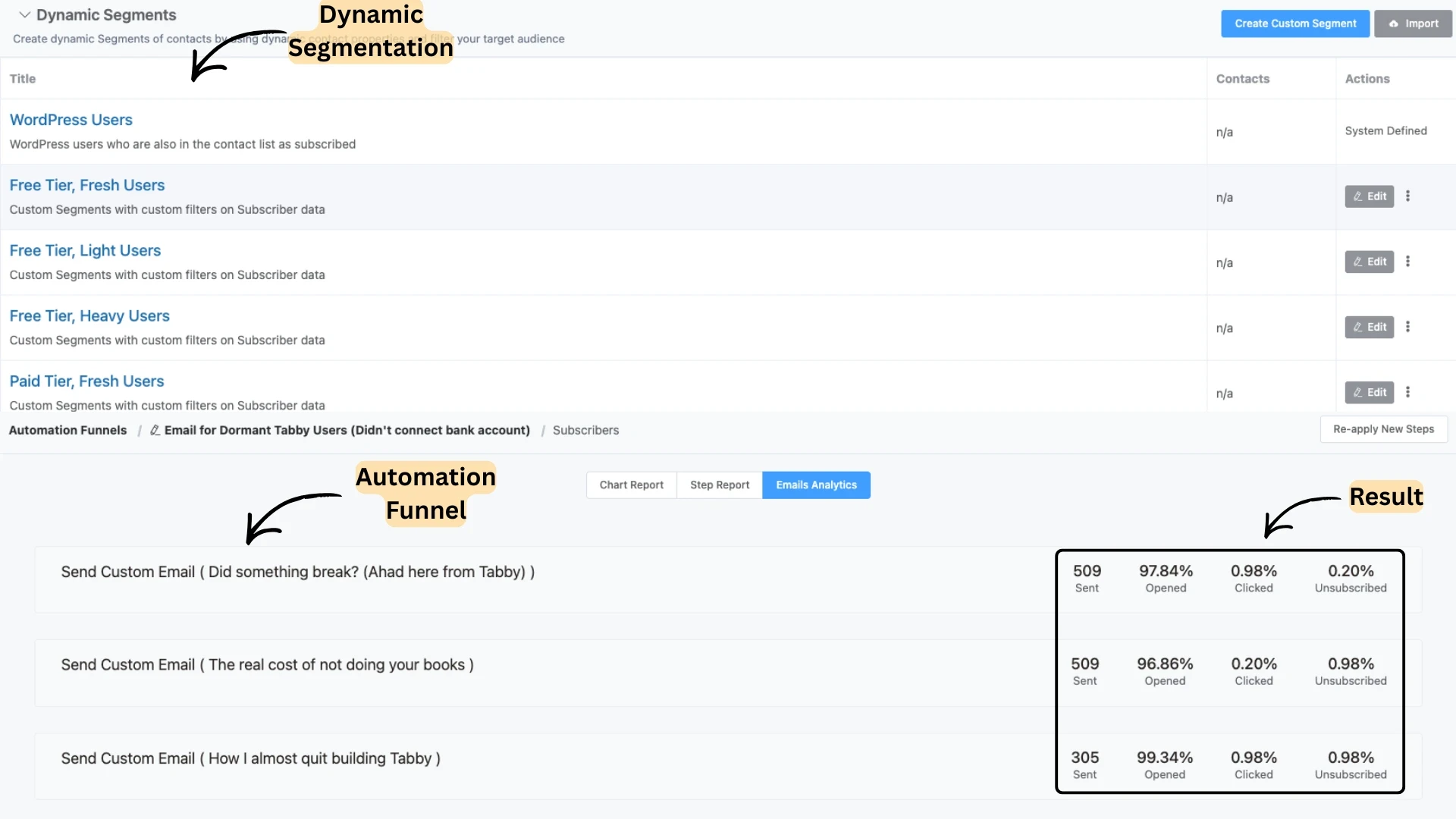
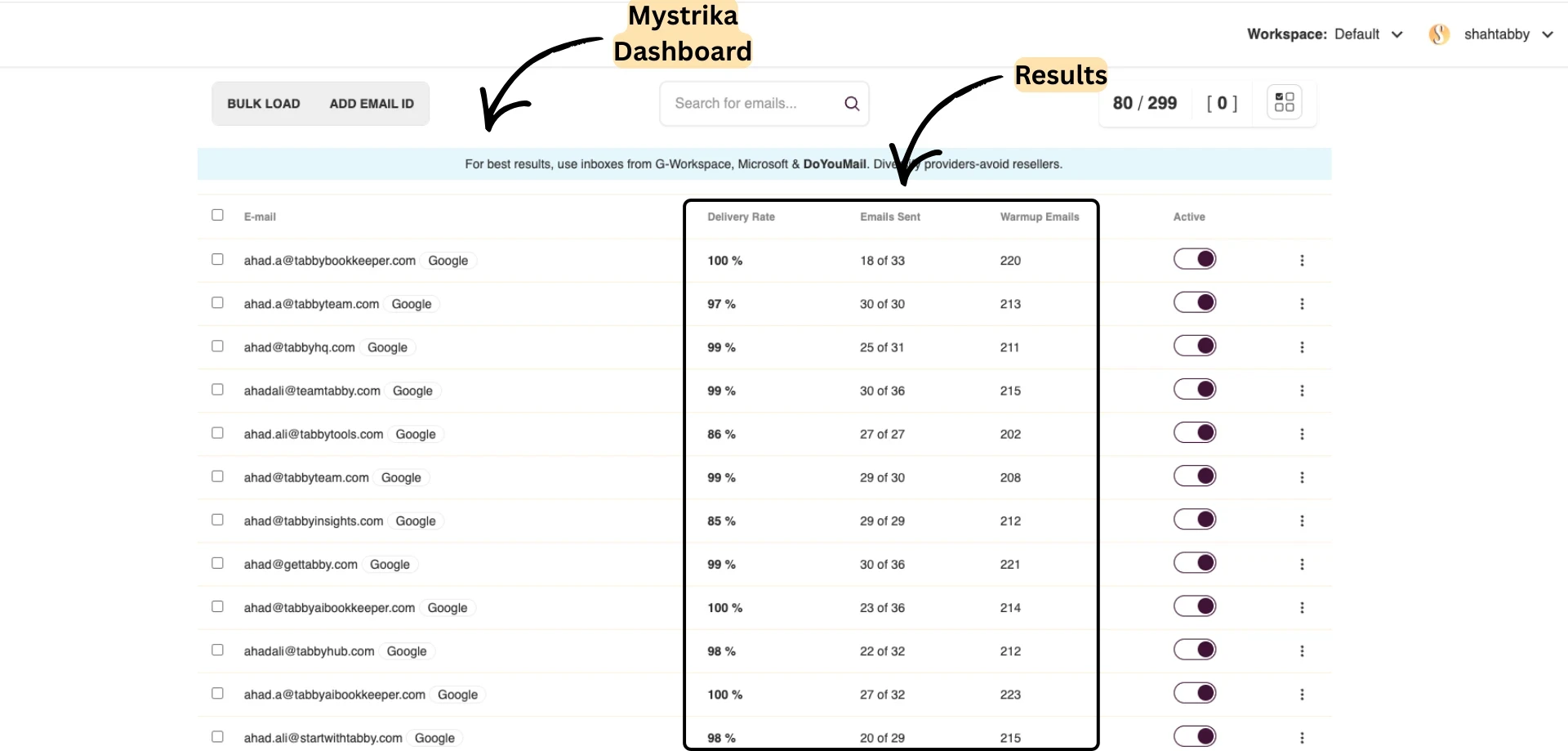
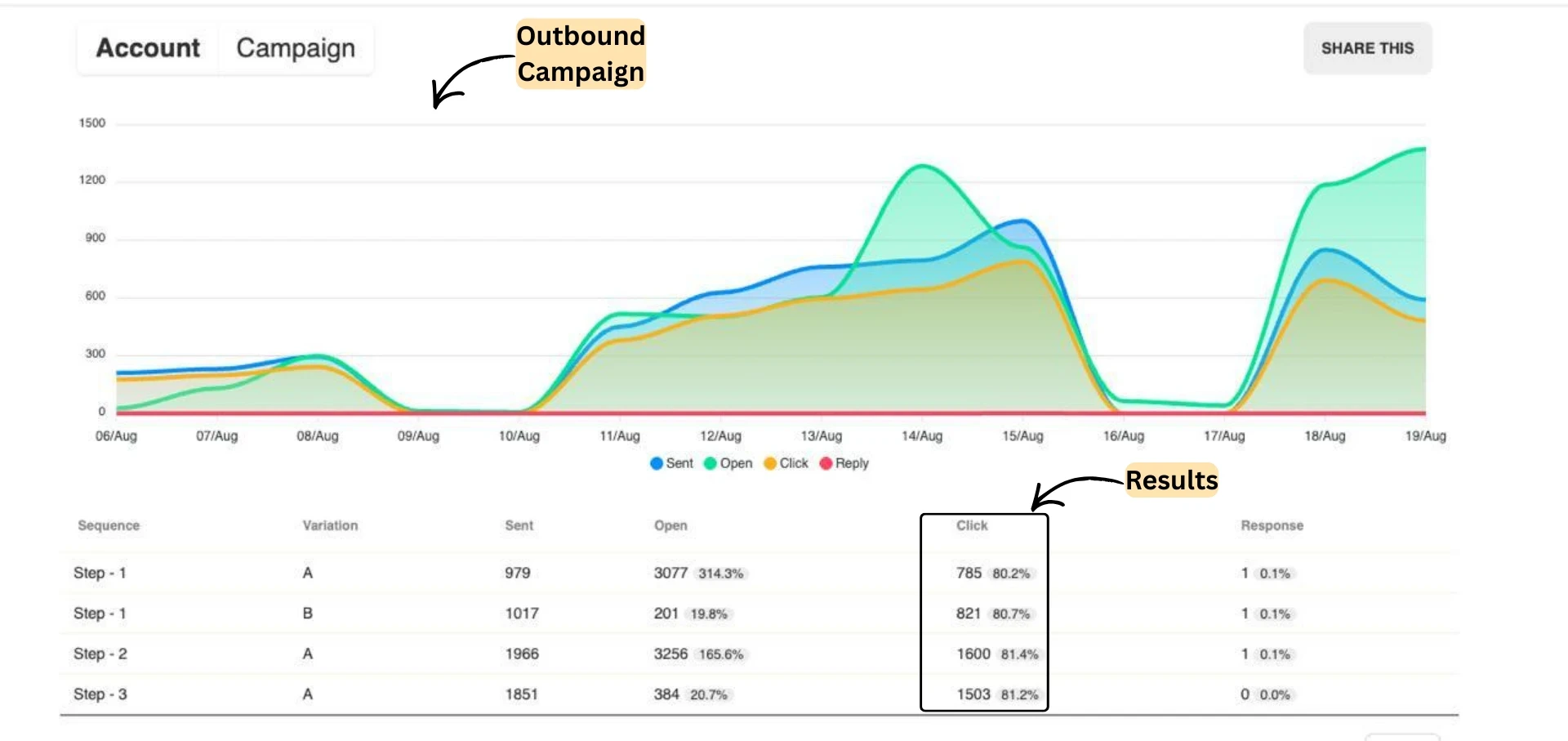
Using Mystrika, we built the outbound email framework and configured SPF, DKIM, and DMARC, along with custom tracking domains. We created several email addresses on Google Workspace, synced them with Mystrika, and put them in warmup. For the sales Ideal Customer Profiles, we targeted research and built email lists.
Then we created email copies that used spintax for high conversions, included personalization variables, created curiosity in the subject lines, and stayed clear of the spam triggers. We used those lists to do outbound campaigns to contact and convert leads.
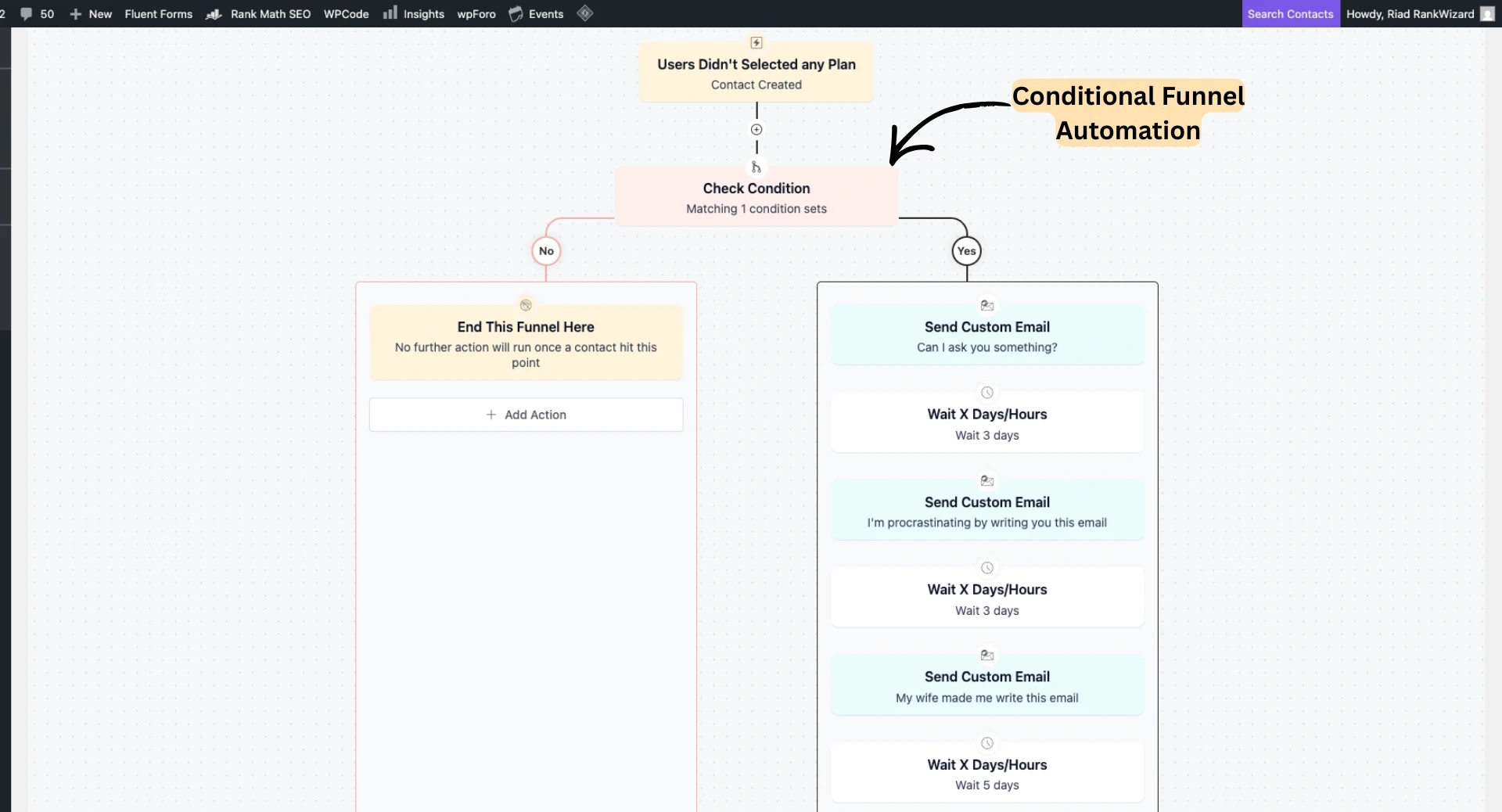
Using different user personas, we created conditional workflows for the drip campaigns to let the funnel automatically determine if a user should step through a sequence, which ensures the user receives the correct messages in real time.
We used the lead lists from Tabby to target UGC creators and sales leads for outbound campaigns, where we used custom messages to engage and convert them to the right audience.
Community Building & Support
We recommended that they hire a Customer Support Manager, and they brought one on to strengthen their support team.
CRO & Marketing Analytics
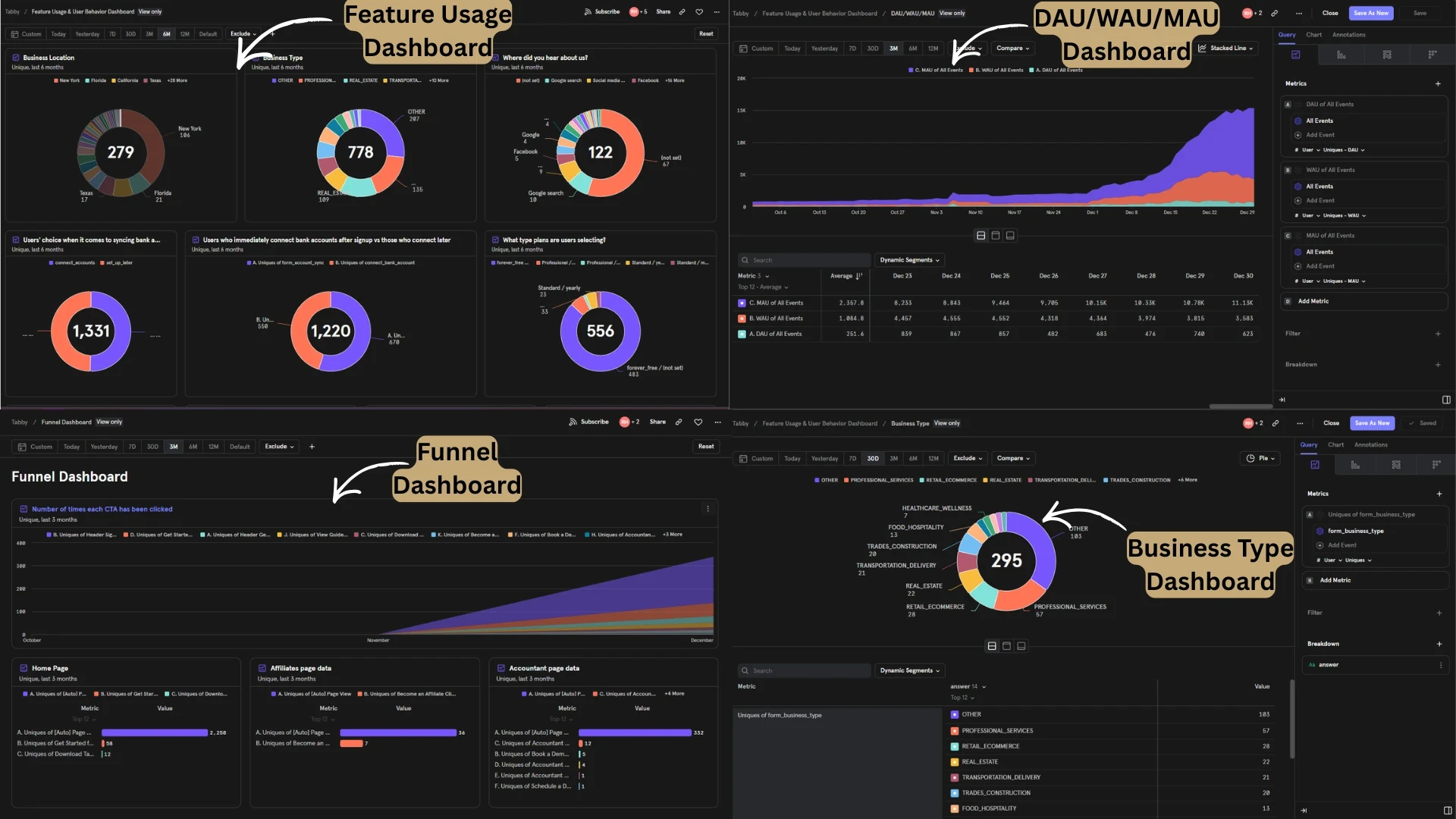
We implemented Google Analytics to measure user activity, and for monitoring purposes, we used Google Tag Manager to set up all required tracking tags on different platforms. To measure success regarding the predefined key performance indicators, objectives, and events, we created dashboards in Mixpanel. This meant that we looked at each individual product, constructed a set of pertinent business-related questions considering each of the KPIs we framed, and then customized the views of each dashboard so that all the insights could be centralized.
Developed user behavior dashboards that were focused on feature usage, translating product objectives into specific detailed KPI questions. Each of those questions entailed several specific actions that needed to be tracked via events on the frontend and backend, and then, the respective developers were responsible for implementing everything to record activities such as clicks, interactions with pricing, and the utilization of free trials. This helped us validate KPIs and build the necessary charts for accurate and informed decision-making.
We also set up event tracking in the product, built Dashboards for daily, monthly, and weekly active users, added funnel dashboards, and implemented heatmap and session recording tools, in order to facilitate the improvement of conversion rate optimization and user experience overall.
What Tabby Did next
Following the guidelines we provided, Tabby began to hold weekly meetings with members of the core team. In these meetings, team members provided departmental updates regarding their progress. After Tabby spoke with our specialized team members regarding the deliverables, we initiated the collaboration process.Each team member worked on the assignment.
Overall Growth
Result:
39k MRR
1,400+ active users
91%+ paid conversion (from trial plan)
50k+ Total Impression
Below are the detailed growth result:
Initially, we conducted competitor analysis and deep keyword research to learn about the prevailing trends in the market.
After that we focused on audience targeting, optimized the ad copy, and enhanced the engagement.
Along with that, we improved the UI and UX, optimized site speed, and refined CTA buttons to increase conversions.
We also created new BoFu landing pages and published 25 lead magnets in the form of tax calculator pages to capture and convert more leads.
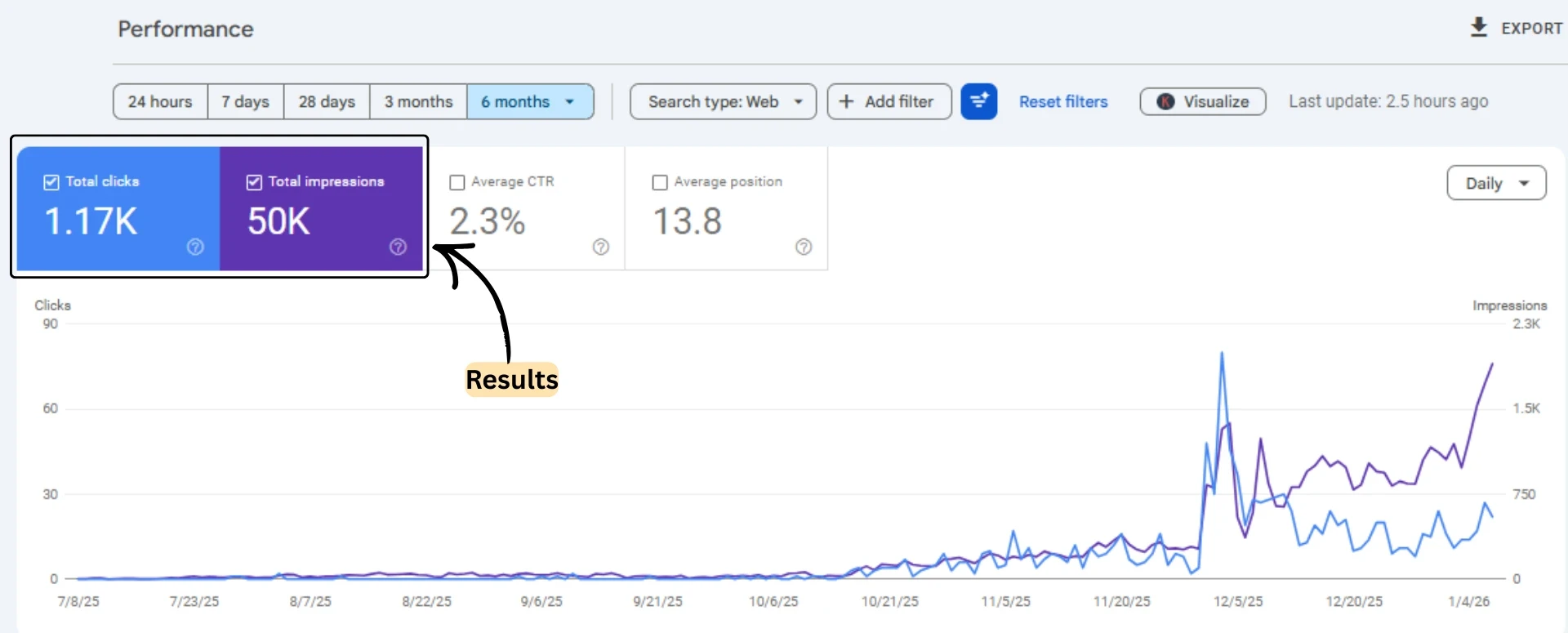
Total impressions increased from about 14 to 2000 from June 1 to the end December, an increase of roughly 50k. In the same period, total daily clicks increased from 0 to 34
We created a detailed content strategy using competitor analysis, keyword research, and audience mapping. To plan ahead, we built a content calendar. Then focused on the production and publishing to keep the audience engaged.
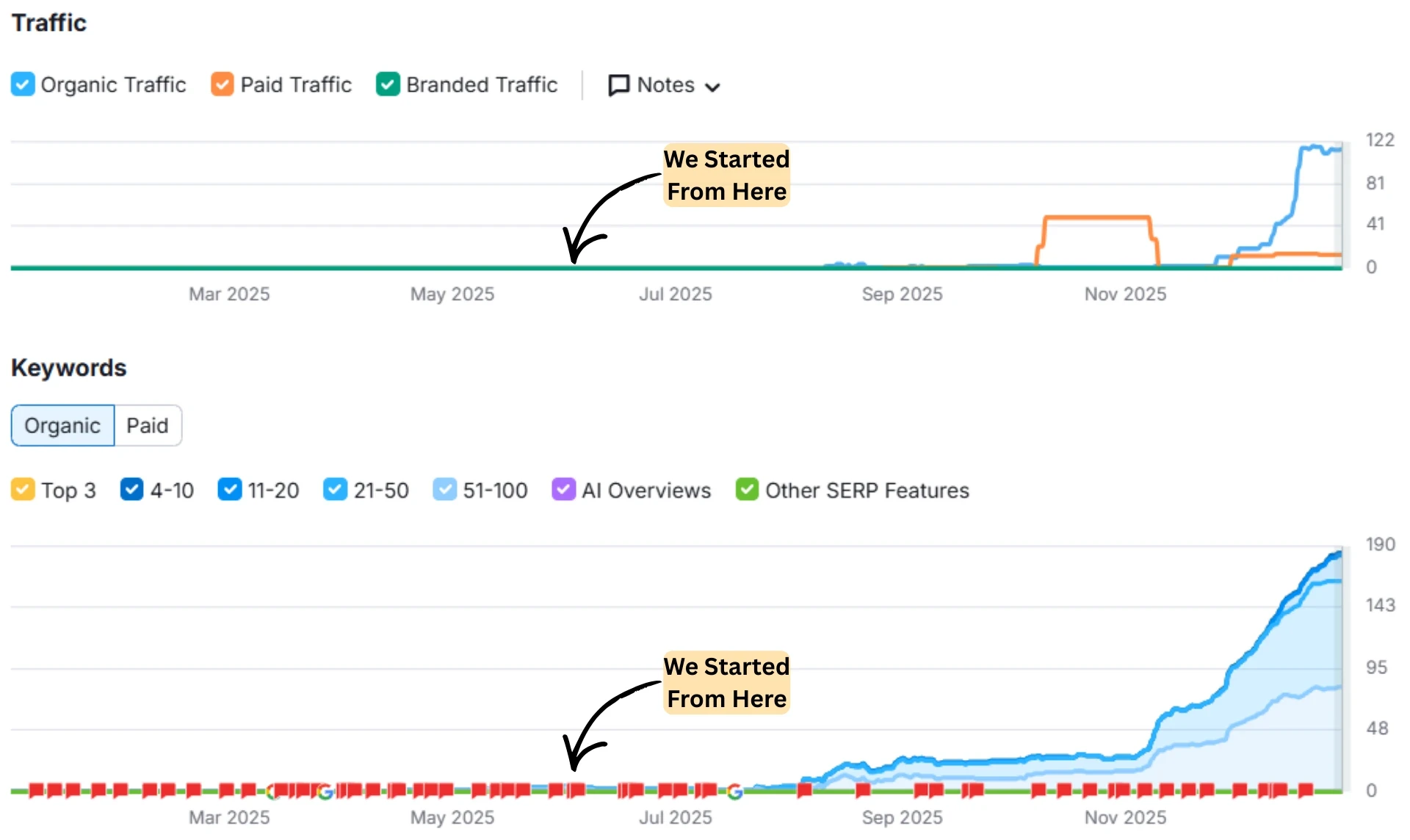
Total keyword rankings increased by 4,525% from 4 keywords in June to 185 in late December. During this time, organic daily traffic increased from almost zero to 114 visitors.
We started PPC campaigns and multiple email campaigns to nurture and convert potential leads.
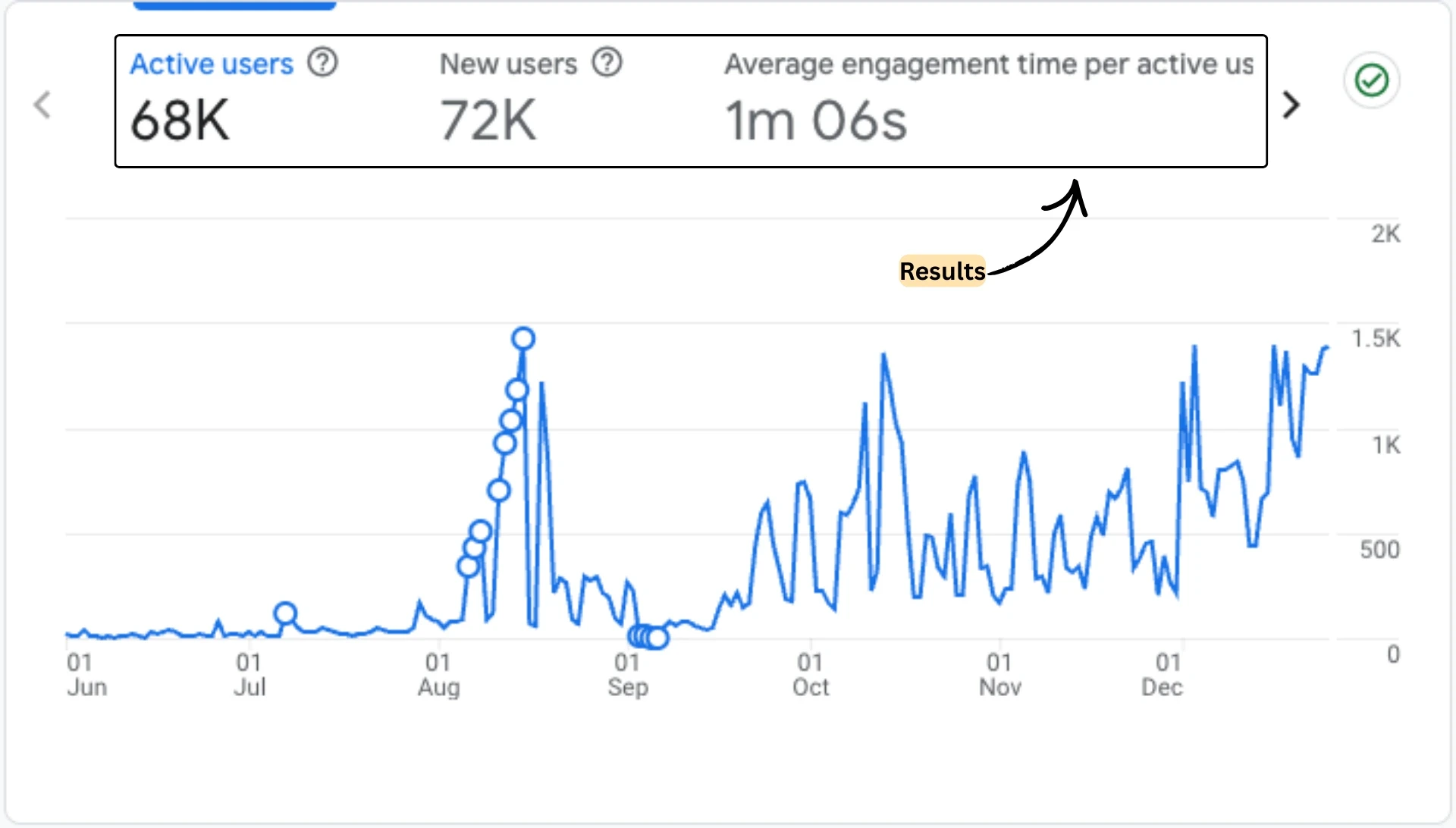
Active users increased by approximately 1400%, showing strong and consistent growth over the measured period.
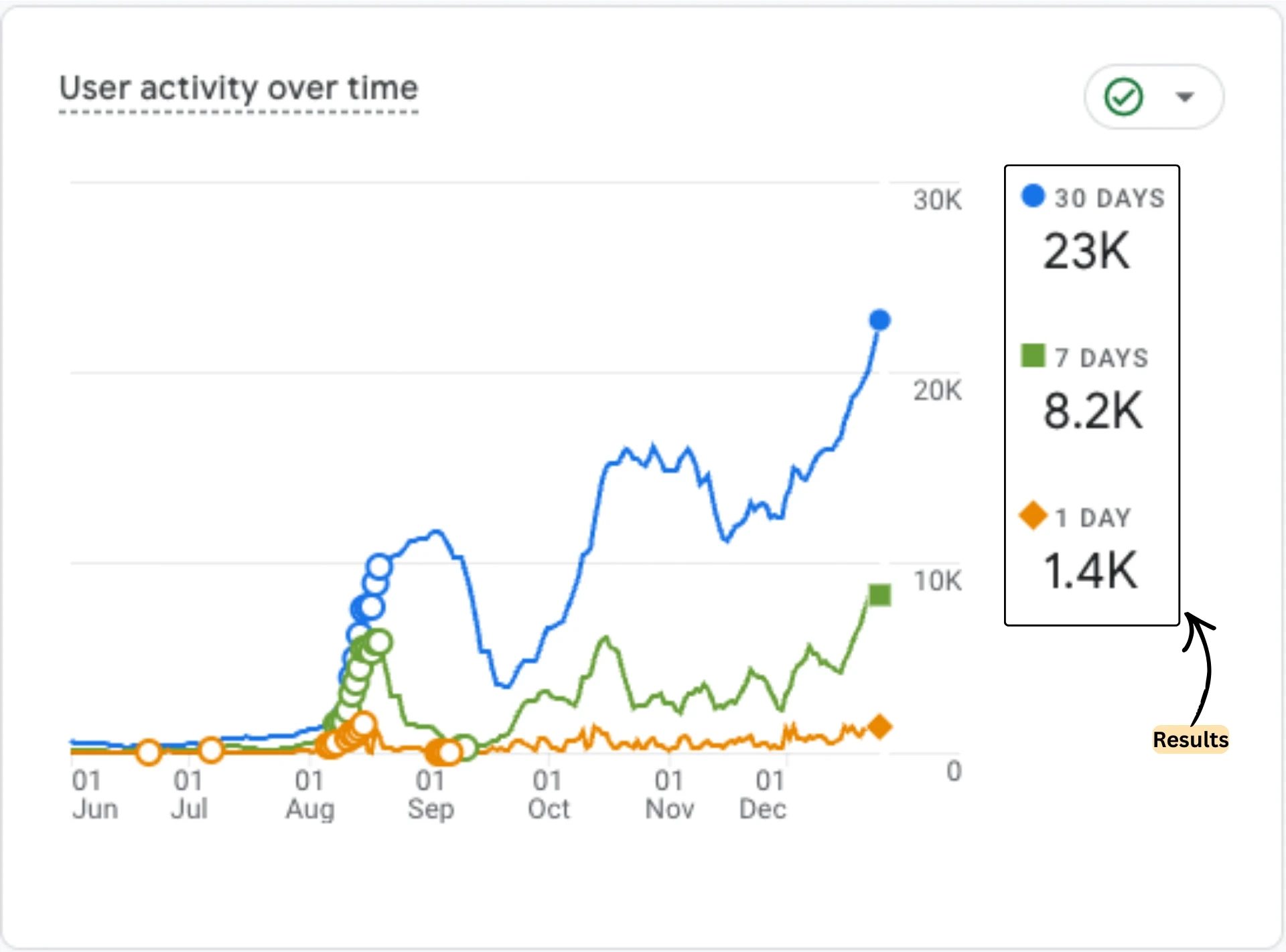
User activity grew nearly 20-22× overall, with strong momentum across daily, weekly, and monthly users showing healthy, scalable, and sustained growth rather than a one-time spike.
We ran several email campaigns to turn potential leads into customers.
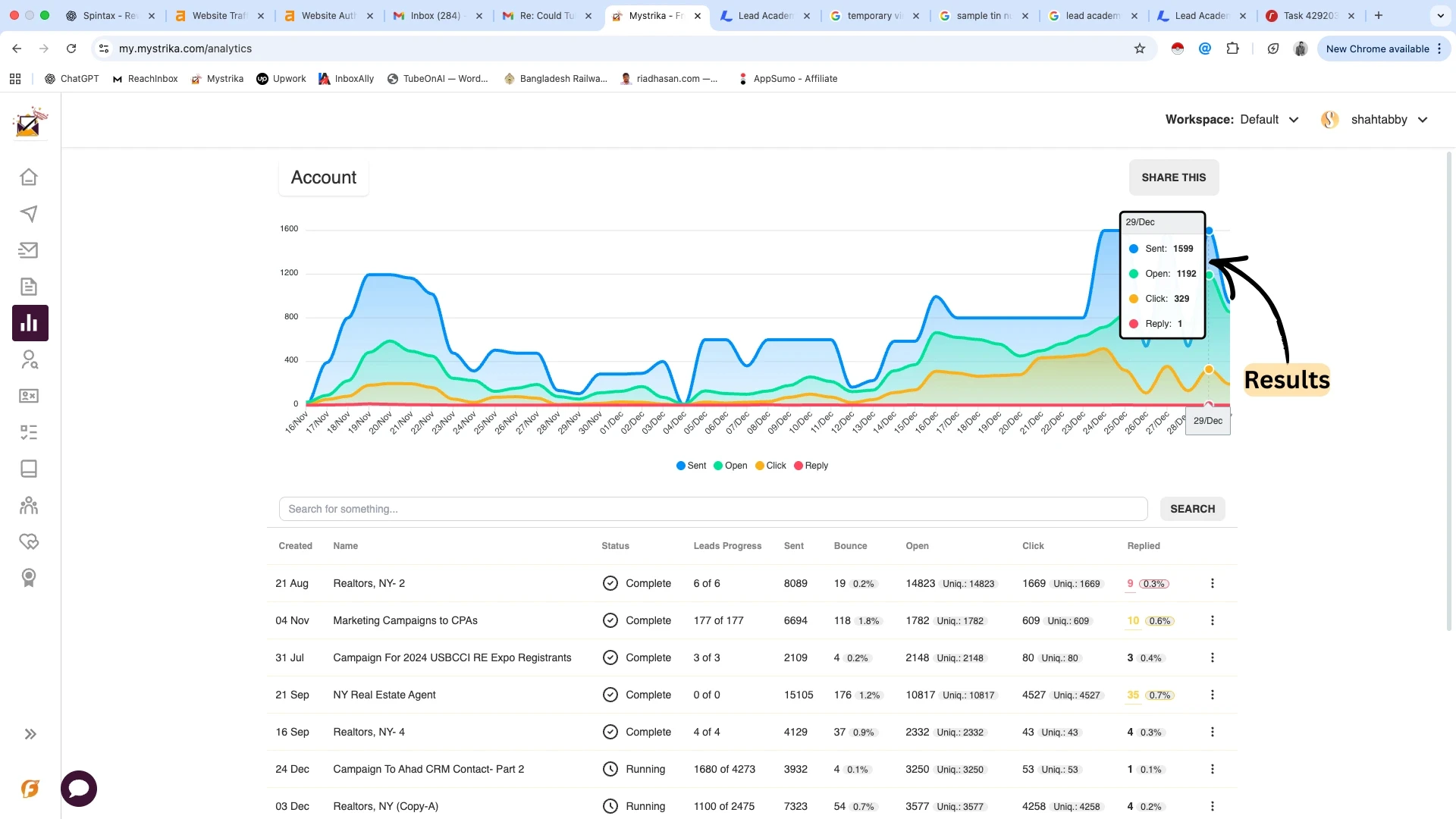
The total number of emails sent increased by 1,499%, sending a limit increased from 100 to 1600 on December 29. Daily open rates increased from 50% to 90% on the final date, the average click rate was 25%.
Over time, email emerged as the top channel, according to the traffic acquisition data from GA4.
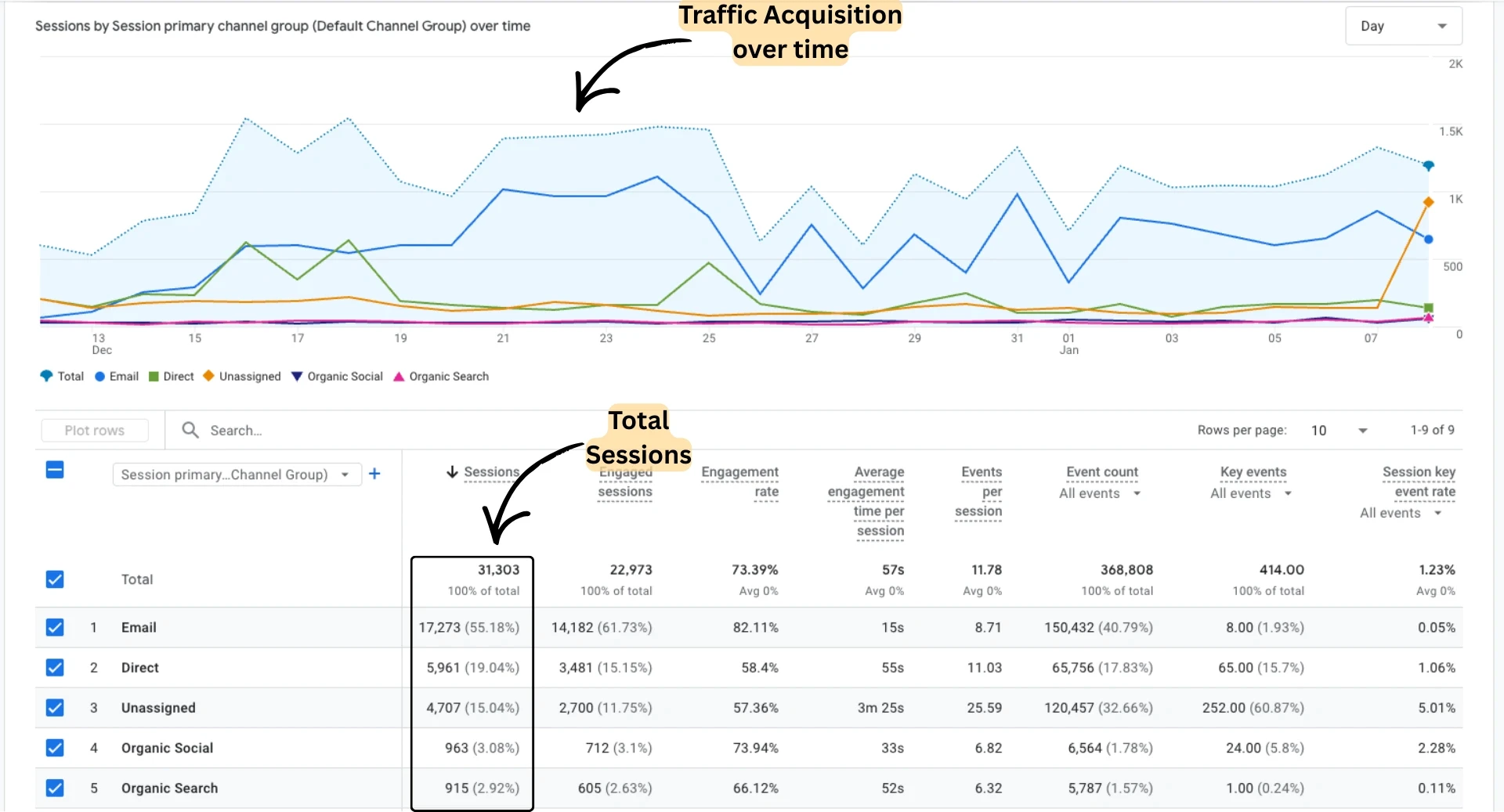
The traffic acquisition data shows that email was the strongest channel over time. It generated 17,237 sessions, accounting for about 55.18% of total traffic, and also delivered a high engagement rate of around 82.11%.
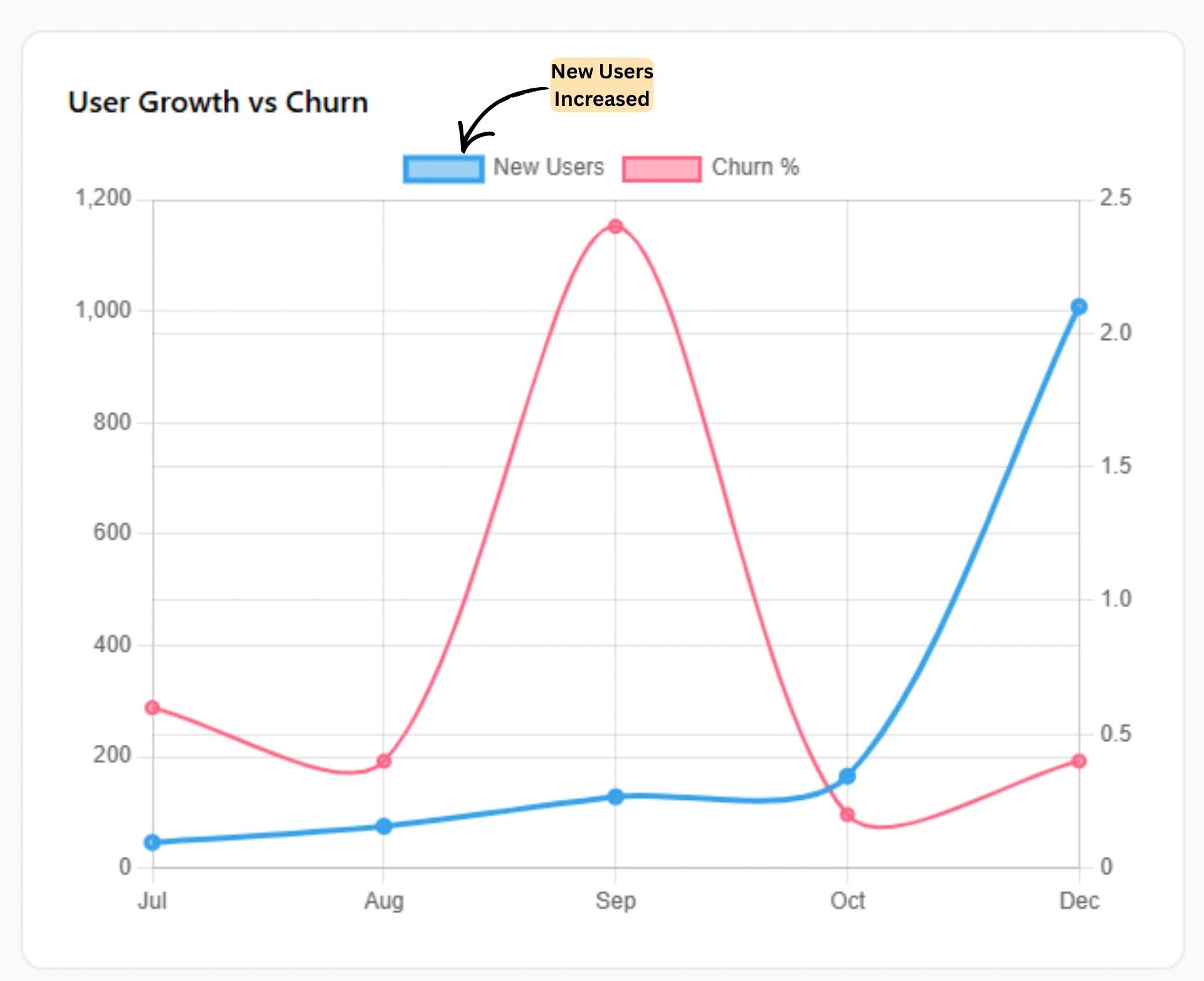
Achieved remarkable user growth of nearly 1900% while effectively reducing churn by over 79% from September to December.
We launched a PPC campaign and are still running ads on carefully researched keywords.
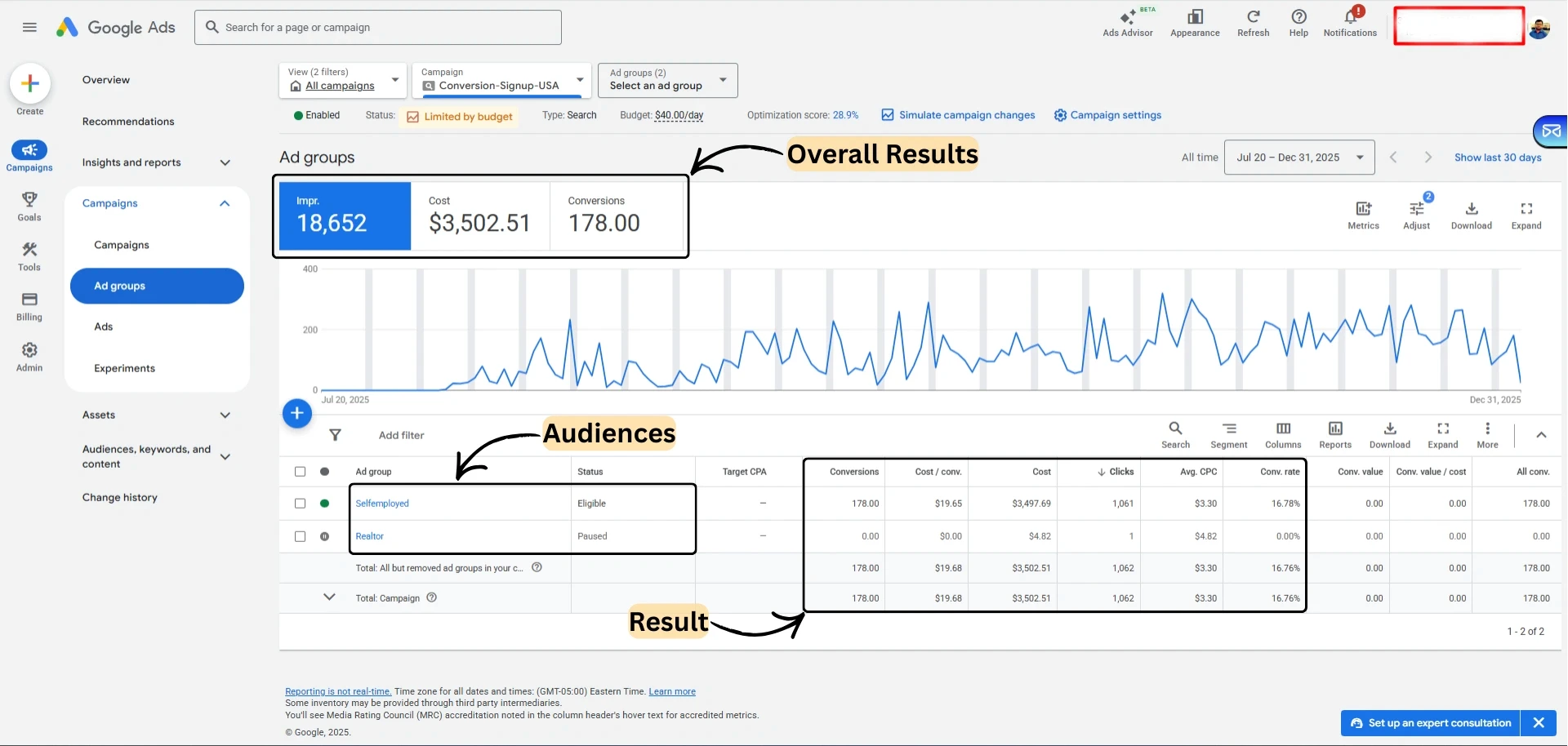
We've brought in 178 conversions so far with a total spend of $3,497.69. Average cost per conversion is sitting at $19.65, maintained by a strong conversion rate of 16.78%.
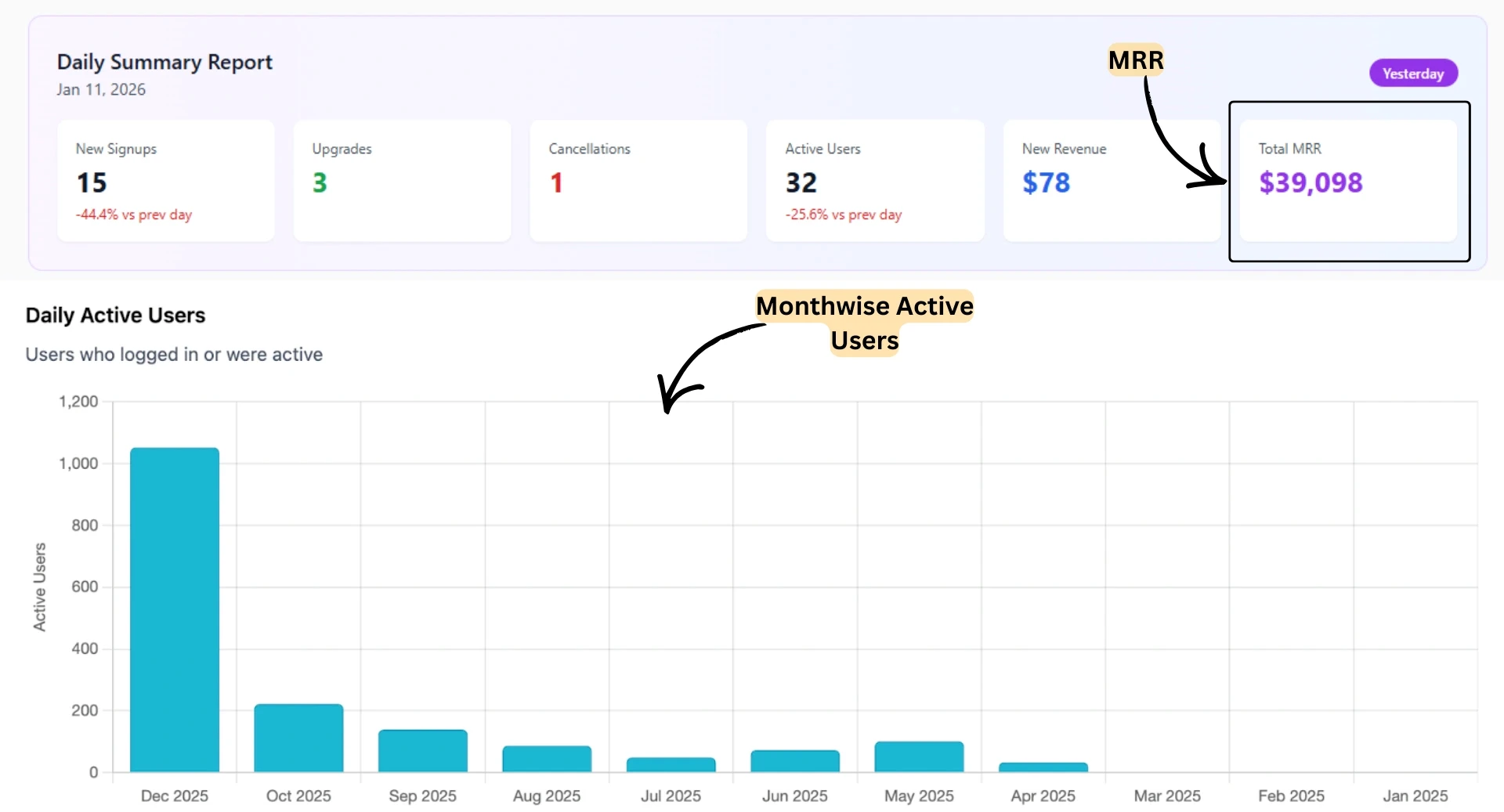
The total Monthly Recurring Revenue (MRR) is $39,098.
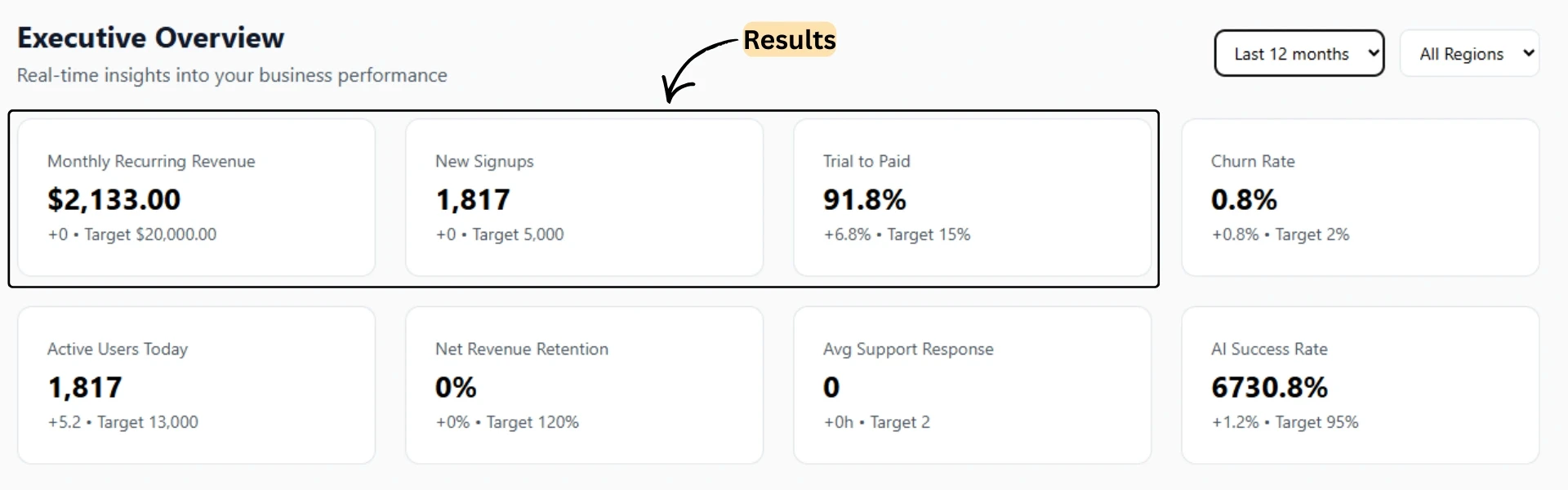
The platform has 1,817 new signups and an impressive 91.8% trial-to-paid conversion rate! The monthly recurring revenue is at $2,133, and the AI success rate is an amazing 6730.8%. Plus, active users are looking good at 1,817.
The Challenge
No clear demand generation plan was in place, even though the product was ready to launch and visibility was still very low.
Setting accurate expectations for Tabby was complex because of the finance and bookkeeping market's overcrowding. Tabby's positioning was especially difficult because laying out an accounting solution to non-accounting people is a hard sell.
The trust needed to speak to potential customers was not settled sufficiently by a more technical claim. Tabby needed to prove itself to its customers by demonstrating the product’s messaging.
What We Did
We managed Tabby’s marketing for all of the months from Jul - Dec 2025 and managed to drive growth at all of the stages of the funnel by brand building, advertising, search engine optimization, partnerships, user generated content, emails, community driven content, and writing.
All levels of the marketing funnel at Tabby were served by the other channels we generated: advertising, search engine optimization, content creation, and marketing by emails, all supplemented with Product Hunt, partnerships, user generated content, and affiliate marketing.
Tracking, CRO, and scalability: In support of the more complex analyses of user behavioral patterns, we reinforced set up dashboards, event tracking, advanced analytics, and customer relationship management and conversion rate optimization.
The Results
Tabby was able to achieve about $38,000 to $39,000 in monthly recurring revenue, with over 1,400+ users, and a conversion rate that was more than 91% from trial to paid.
Total impressions crossed 50k, keyword rankings grew by over 4,500%, and organic traffic rose from almost zero to 114 daily visitors. Email became the top acquisition channel, driving over 55% of total traffic with high engagement.
PPC campaigns delivered 178 conversions at a low $19.65 cost per conversion, while active users grew nearly up to 1,900% and churn dropped by over 79%.
Introduction
Sector: Finance and Accounting Technology
Location: New York, USA
Service Offered: AI-powered bookkeeping that takes care of day to day financial tasks and keeps books clean without the usual headache.
Target Audience: Small businesses, solo founders, and self-employed professionals who want simple, accurate bookkeeping without spending too much time or money on it.
Tabby makes bookkeeping easy and stress free by using AI to automate the boring parts. It helps business owners get focused, manage their time better, and understand their money without having to be an accounting person.
Before Rank Wizards
Tabby began with a simple, real problem. One founder, Ahad Ali, a CPA in New York, worked with small businesses for over 14 years. He kept seeing messy books, confusing numbers, and too much manual work. That frustration inspired Tabby.
After building the product and finalizing the tech, the Tabby team approached Rank Wizards before launch. They already had a solid GTM strategy in place. We stepped in to refine it and focus on demand generation, while the Tabby team handled the other GTM pieces.
Challenges
Although a product is actually completed, there is still no defined strategy for demand generation.
Positioning Tabby is challenging, considering how competitive the finance and bookkeeping market is.
Prior to launch, visibility is low, and there is uncertainty regarding whether the product will be able to reach the target audience.
There is a need to drive a solution focused on CPAs to non accounting users.
There is a need to communicate the trust, accuracy, and reliability of the product, and to do so without being overly complex or technical.
What We Did (Department Wise)
Full Marketing Workplan
From July 2025 to December 2025, we ran Tabby’s full marketing plan across seven areas. We Boosted:
Brand visibility
Paid ads
SEO
Partnerships
User generated content
Social and web content
Email campaigns
Community engagement
Analytics tracking for result improvement
Activation & Visibility
We optimized the website for keywords and improved the UI/UX, speed, and CTAs.
Suggested ICP-targeted landing pages for specific keywords so the right audience reached and converted on the relevant pages.
We generated a full strategy for the Product Hunt launch. This included writing a compelling copy and assembling all the necessary artifacts: visuals, description, and supplementary content. Then we carried out the launch and kept a keen eye on the metrics. To cover all bases, we structured a comprehensive task breakdown and process checklist. We also scheduled some time for process-related troubleshooting to boost our chances for a successful launch and proper audience reach.
We designed a strategy for the launch of the affiliate program and set clear terms. We designed the landing page for the affiliate program and launched it.
Paid Marketing
An ad campaign for LinkedIn, Meta, and Google was created and activated. On Google Ads, self-employed individuals were targeted which drove better CTR and consistently gained impressions in the first 6 months. Campaigns on TikTok and Reddit were tried in the beginning, but due to high cost per conversion and the low relevance of the leads we abandoned them.
In regards to PPC, the competition, and more were considered along with search intent, clustering, match type, average monthly search volume, and year-over-year search changes for a particular ad to analyze keywords. Different sets of keywords were tested such as the broad term “bookkeeping software”, the specific term “real estate bookkeeping software”, and the audience specified terms “small business/self-employed bookkeeping,” and “e-commerce bookkeeping software” to measure each of their performances.
In Meta ads, we started retargeting those who previously visited our website and self-employed individuals who fit within the targeted interest demographic. Performance of the 7 ad copies was tested and the highest performing copy was a UGC style, which continues to deliver good results. Testing interest-based and broad audience targeting was done and the broad audience targeting was more effective, resulting in a better cost per outcome.
Content & SEO
We completed a full technical SEO audit and resolved quick wins and low-hanging issues to improve the site's performance. We also studied the content strategies and positioning of competitors: Otto, Booke, and Wave Apps. We used Ahrefs and Semrush for detailed competitor SEO analysis, batch comparison, and report creation for Tabby.
We performed keyword research across ToFu, MoFu, and BoFu for different verticals: construction and real estate, finance and legal, small business, self employed, solopreneur, and contractor. We created an SEO content-based calendar with standard operating procedures, tracking methods, and performance metrics for easy monitoring.
We hired and trained two content writers in-house to increase the content production rate and improve quality. We built BoFu landing pages along with MoFu and ToFu blog content to support users at every stage of the funnel.We made lead magnets and built free tools to attract users and engage and convert them.
B2B Partnerships
We built ideal customer profiles for partnerships by category name, domain type, and rationale for each. This made it easier to identify potential partnerships and align the partnerships to the business objectives and target audience.
UGC & Influencer Marketing
We organized a creator partnership program with a custom-designed affiliate site plan, which included documentation of the blog name, URL, description, key topics, and a seven-point audience-content alignment rationale. In parallel, we constructed a public Wall of Love to highlight the positive testimonials and build trust.
Content Marketing (Social + Web)
We initiated a weekly newsletter as a means of collecting inbound user contacts while maintaining communication and engagement through content.
Email Marketing
We established an inbound CRM system with FluentCRM and integrated it with Google Workspace. This involved building a new project, activating the Gmail API, configuring the credentials, and then publishing the OAuth app and Access detail collection.
After this, we could create lists and tags for better segmentation to be able to have targeted campaigns and convert free users into paying users.
Using Mystrika, we built the outbound email framework and configured SPF, DKIM, and DMARC, along with custom tracking domains. We created several email addresses on Google Workspace, synced them with Mystrika, and put them in warmup. For the sales Ideal Customer Profiles, we targeted research and built email lists.
Then we created email copies that used spintax for high conversions, included personalization variables, created curiosity in the subject lines, and stayed clear of the spam triggers. We used those lists to do outbound campaigns to contact and convert leads.
Using different user personas, we created conditional workflows for the drip campaigns to let the funnel automatically determine if a user should step through a sequence, which ensures the user receives the correct messages in real time.
We used the lead lists from Tabby to target UGC creators and sales leads for outbound campaigns, where we used custom messages to engage and convert them to the right audience.
Community Building & Support
We recommended that they hire a Customer Support Manager, and they brought one on to strengthen their support team.
CRO & Marketing Analytics
We implemented Google Analytics to measure user activity, and for monitoring purposes, we used Google Tag Manager to set up all required tracking tags on different platforms. To measure success regarding the predefined key performance indicators, objectives, and events, we created dashboards in Mixpanel. This meant that we looked at each individual product, constructed a set of pertinent business-related questions considering each of the KPIs we framed, and then customized the views of each dashboard so that all the insights could be centralized.
Developed user behavior dashboards that were focused on feature usage, translating product objectives into specific detailed KPI questions. Each of those questions entailed several specific actions that needed to be tracked via events on the frontend and backend, and then, the respective developers were responsible for implementing everything to record activities such as clicks, interactions with pricing, and the utilization of free trials. This helped us validate KPIs and build the necessary charts for accurate and informed decision-making.
We also set up event tracking in the product, built Dashboards for daily, monthly, and weekly active users, added funnel dashboards, and implemented heatmap and session recording tools, in order to facilitate the improvement of conversion rate optimization and user experience overall.
What Tabby Did next
Following the guidelines we provided, Tabby began to hold weekly meetings with members of the core team. In these meetings, team members provided departmental updates regarding their progress. After Tabby spoke with our specialized team members regarding the deliverables, we initiated the collaboration process.Each team member worked on the assignment.
Overall Growth
Result:
39k MRR
1,400+ active users
91%+ paid conversion (from trial plan)
50k+ Total Impression
Below are the detailed growth result:
Initially, we conducted competitor analysis and deep keyword research to learn about the prevailing trends in the market.
After that we focused on audience targeting, optimized the ad copy, and enhanced the engagement.
Along with that, we improved the UI and UX, optimized site speed, and refined CTA buttons to increase conversions.
We also created new BoFu landing pages and published 25 lead magnets in the form of tax calculator pages to capture and convert more leads.
Total impressions increased from about 14 to 2000 from June 1 to the end December, an increase of roughly 50k. In the same period, total daily clicks increased from 0 to 34
We created a detailed content strategy using competitor analysis, keyword research, and audience mapping. To plan ahead, we built a content calendar. Then focused on the production and publishing to keep the audience engaged.
Total keyword rankings increased by 4,525% from 4 keywords in June to 185 in late December. During this time, organic daily traffic increased from almost zero to 114 visitors.
We started PPC campaigns and multiple email campaigns to nurture and convert potential leads.
Active users increased by approximately 1400%, showing strong and consistent growth over the measured period.
User activity grew nearly 20-22× overall, with strong momentum across daily, weekly, and monthly users showing healthy, scalable, and sustained growth rather than a one-time spike.
We ran several email campaigns to turn potential leads into customers.
The total number of emails sent increased by 1,499%, sending a limit increased from 100 to 1600 on December 29. Daily open rates increased from 50% to 90% on the final date, the average click rate was 25%.
Over time, email emerged as the top channel, according to the traffic acquisition data from GA4.
The traffic acquisition data shows that email was the strongest channel over time. It generated 17,237 sessions, accounting for about 55.18% of total traffic, and also delivered a high engagement rate of around 82.11%.
Achieved remarkable user growth of nearly 1900% while effectively reducing churn by over 79% from September to December.
We launched a PPC campaign and are still running ads on carefully researched keywords.
We've brought in 178 conversions so far with a total spend of $3,497.69. Average cost per conversion is sitting at $19.65, maintained by a strong conversion rate of 16.78%.
The total Monthly Recurring Revenue (MRR) is $39,098.
The platform has 1,817 new signups and an impressive 91.8% trial-to-paid conversion rate! The monthly recurring revenue is at $2,133, and the AI success rate is an amazing 6730.8%. Plus, active users are looking good at 1,817.
Other Projects
Other Case Studies
Check our other project case studies with detailed explanations

Other Projects
Other Case Studies
Check our other project case studies with detailed explanations